Finding the right cat litter box can reduce odors, simplify maintenance, and keep multi-cat households running smoothly. This guide highlights five top options—ranging from open-top self-cleaning models to durable stainless steel enclosures—each with features like app control, sensors, and odor management. Read on to compare design approaches, safety features, and maintenance needs to choose the best fit for your cats and home.
| Product | Brand | Notes |
|---|---|---|
| Self Cleaning Litter Box, Open Top Automatic Litter Box | PARUUNTYS | App control, multiple sensors, odor control |
| Cumrige Self Cleaning Litter Box, Large Capacity | Cumrige | Large drum capacity, quiet operation |
| PetPivot Self Cleaning Litter Box, Open Top | PetPivot | Open-top design with safety sensors |
| Stainless Steel Litter Box | XL Enclosed With Lid | AIPERRO | Stainless steel, exclusive 30° angled plate |
| Stainless Steel Litter Box With Lid, Front Entry | Lobeve | Enclosed/dual-entry options, easy cleaning |
The following sections review five models most relevant to “Best Cat Litter Box,” covering design, safety, maintenance, and suitability for households with one or more cats. Each product includes an at-a-glance overview and practical considerations to help you decide which box best fits your needs.
PARUUNTYS Open-Top Self Cleaning Litter Box

The PARUUNTYS model emphasizes open-top access, offering a generous 16.5”×16.5” entrance for easy entry and exit. An open design helps reduce claustrophobia for cats and enhances airflow, supporting a more comfortable litter experience. Safety features include seven sensors (four weight-activated and three infrared detectors) that pause operation at the first sign of a cat’s proximity or movement, reducing the risk of injury. App control enables remote cleaning, scheduling, and usage tracking, with real-time alerts when the waste bin fills. Notes indicate 2.4G WiFi for stable connectivity. This setup is well-suited for multi-cat homes seeking a balance of convenience and safety with remote management of litter tasks.
Key considerations:
– Pros: Open-top airflow and easier access; strong multi-sensor safety; convenient app control with usage insights.
– Cons: Requires WiFi and compatible router; open design may release odors more readily in small spaces.
– Best for: Cats that prefer open designs and households prioritizing remote control and monitoring.
Cumrige Self Cleaning Litter Box, Large Capacity
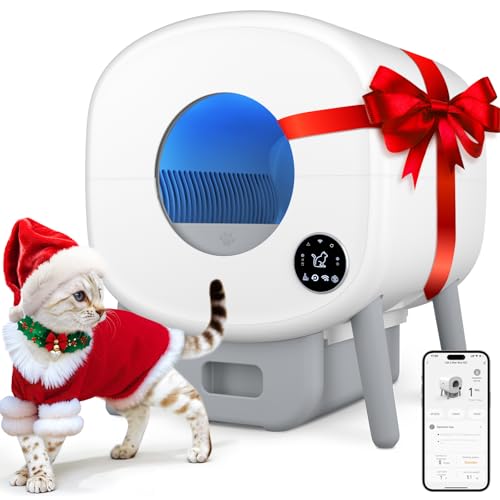
The Cumrige model highlights a large drum capacity and compatibility with clump-type litter, making it suitable for multiple cats or longer intervals between changes. It features sensors that pause cleaning when a cat is present, prioritizing safety and minimizing disturbance. The device is designed for quieter operation to maintain a peaceful home environment. A 15-liter waste bin supports longer stretches between maintenance tasks, which can be especially advantageous for households that travel or have busy schedules. Overall, Cumrige emphasizes a balance of capacity, safety, and quiet performance for multi-cat households.
Key considerations:
– Pros: Large waste capacity; cat safety pauses during presence; quiet operation.
– Cons: May require more space due to the larger footprint; maintenance involves refilling and emptying the drum.
– Best for: Multi-cat homes or households seeking long intervals between litter changes.
PetPivot Open-Top Self Cleaning Litter Box

PetPivot offers an open-top design with multi-layer safety protection, including infrared and Hall effect sensors to detect a cat’s presence. The self-cleaning process stops immediately if a cat enters mid-cycle, reducing injury risk. A large 10-liter waste bin helps simplify maintenance by holding waste for multiple days. The model includes liners and a mat to help trap odors and keep the area cleaner between cleanings. It’s especially well-suited for households with multiple cats seeking an easy, scoop-free experience with reliable odor control.
Key considerations:
– Pros: Immediate pause on mid-cycle entry; robust safety sensors; odor-locking system.
– Cons: Open-top design may need more frequent odor management in tight spaces.
– Best for: Cat households prioritizing safety and ease of maintenance with liners and mats included.
AIPERRO Stainless Steel Litter Box With Lid

This XL stainless steel litter box is designed to reduce litter scatter and provide a durable, rust-proof enclosure. The exclusive 30° angled litter filter plate helps keep litter inside by reducing spillage and tracking. Its extra-large dimensions (23 x 15 x 11 inches) accommodate large cats and multi-cat households, with high sides to minimize spray and mess. The enclosure design is intended to simplify cleaning while maintaining privacy for cats, and the steel construction is noted for longevity and ease of maintenance compared with plastic options.
Key considerations:
– Pros: Durable stainless steel; angled filter plate reduces litter scatter; large capacity.
– Cons: Enclosed design may feel snug for very large cats; cleaning steel requires standard care.
– Best for: Homes needing long-lasting durability and reduced litter dispersion with a private space for cats.
Lobeve Stainless Steel Litter Box With Lid, Front Entry

Lobeve’s stainless steel design focuses on longevity and versatility, offering both enclosed and semi-enclosed configurations to suit different cat preferences. The dual-entry concept lets you tailor entry style to your cat’s comfort, with easy transitions between open and private spaces. Stainless steel construction helps with odor resistance and durability, while the included litter mat and scoop support convenient maintenance. The model is positioned as a long-term solution for households seeking configurable setup options that can adapt as cats’ needs change.
Key considerations:
– Pros: Dual-entry versatility; durable stainless steel; easy to clean with included accessories.
– Cons: Larger footprints may require more space.
– Best for: Owners who want adaptable configurations and durable materials for ongoing use.
Buying Guide: Key Purchase Considerations and Comparisons
- Open-top vs enclosed: Open-top boxes offer better airflow and easier access, potentially reducing odor buildup, but may release more odor in tight spaces. Enclosed designs help contain smells and splashes but can feel restrictive for some cats.
- Sensor safety and automated cleaning: Look for weight-activated sensors, infrared detectors, and anti-pinch safeguards. App control adds convenience for scheduling, monitoring litter usage, and receiving alerts when maintenance is needed.
- Capacity and maintenance cadence: Multi-cat households benefit from larger waste bins and higher drum capacities to delay frequent bag changes. Consider whether liners are included to simplify maintenance.
- Materials and durability: Stainless steel options tend to last longer and resist odors better than plastic. Enclosures can reduce litter scatter, especially in high-traffic areas or homes with multiple pets.
- Noise and vibration: Quieter models minimize disruption for pets and humans, especially during night use. Review product claims about noise levels and whether the unit operates quietly during cycles.
- Connectivity and compatibility: If opting for app-based control, confirm WiFi requirements (2.4 GHz) and compatibility with your smartphone and home network. Check for battery-free sensors and power needs.
- Size and cat compatibility: Consider cat size, breed, and any mobility constraints. Some models advertise suitability for kittens and medium cats, while others target larger breeds.
- Accessories and extras: Liners, mats, and additional waste bags can simplify upkeep. Some products include these items; others require separate purchases.
- Maintenance routine: Evaluate how easy it is to clean the unit and replace liners or bags. Self-cleaning features save time but may require occasional manual intervention.
- Safety and pet welfare: Ensure the unit pauses if a cat enters mid-cycle, and assess anti-pinch features to reduce injury risk during operation.
When choosing among these models, weigh your household’s typical cat count, space constraints, noise tolerance, and how tech-enabled you want your litter box experience to be. Durable stainless steel options are ideal for long-term use and households prioritizing odor containment and easy cleaning. Open-top designs excel where cats require comfortable access and owners want straightforward maintenance. Each option in this guide provides solid performance across core categories—safety, ease of use, and ongoing upkeep—making them strong contenders for the best cat litter box solution for your home.