The best dog gas remedy depends on the cause and your dog’s needs: chewable supplements suit dogs that accept treats, while drops may be easier for picky pets. Vet’s Best is best for owners seeking a blend with digestive enzymes and probiotics; NaturVet offers soft chews with fennel; HomeoPet provides tasteless drops. The activated charcoal gel below is for certain accidental ingestions, not routine gas relief. Persistent or severe symptoms need veterinary guidance.
| Product | Best suited for | Format |
|---|---|---|
| Vet’s Best Gas Busters | Digestive support with probiotics and enzymes | Tablets |
| NaturVet No Toot | Treat-style gas support | Soft chews |
| HomeoPet Digestive Upsets | Picky pets and multi-pet homes | Drops |
| Activated Charcoal Gel | Veterinary-directed ingestion emergencies | Oral gel |
| Slippery Elm Drops | Daily digestive-support routines | Liquid drops |
Vet’s Best Gas Busters Digestive Support Tablets

These tablets are best for dog owners looking for a multi-ingredient digestive supplement for occasional gas, bloating, or stomach upset. The listed formula includes parsley, slippery elm bark, and ginger root, along with enzymes and probiotics intended to support digestive flora and gut health.
Choose this option if you prefer a tablet and want digestive support that includes both probiotic and enzymatic components. The product listing says it is intended for dogs and cats of all ages and sizes, but follow the package directions for your pet.
Limitation: The listing describes support for occasional symptoms; it does not establish the cause of recurring gas. Ask a veterinarian about persistent digestive problems rather than relying on a supplement alone.
NaturVet No Toot Gas Aid Soft Chews
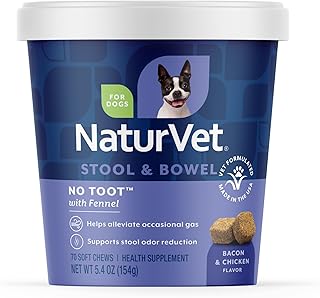
NaturVet No Toot is best for dogs that readily take soft chews. Its listed ingredients include fennel, ginger, and yucca. The product is formulated to help with occasional gas; the listing also says yucca helps reduce stool and urine odors, while ginger supports upset stomachs.
Choose this if a treat-like format is more practical than tablets or liquid drops. The 70-chew package may also suit owners who want a chew format on hand for occasional use.
Limitation: A flavored chew may not suit every dog, and the product is described for occasional gas rather than as a treatment for an ongoing digestive condition. Check the label for use directions and ingredient suitability.
HomeoPet Digestive Upsets Drops

These drops are best for owners who need a liquid option for picky pets or a household with multiple kinds of small animals. The listing describes a tasteless, low-odor formula for dogs, cats, rabbits, and other animals. It says the product may support digestive-upset symptoms including retained gas, vomiting, diarrhea, constipation, and bad breath.
Choose drops if your pet refuses tablets or chews. The listing says the formula does not require refrigeration and can be stored in a cool, dry place.
Limitation: The range of listed symptoms includes issues that may require veterinary assessment. Do not use a supplement as a substitute for care when symptoms are severe, persistent, or worsening.
Activated Charcoal Emergency Pet Gel

This product is best viewed as an emergency-kit item for certain accidental ingestions, not as a dog gas remedy. The listing describes a veterinarian-developed, ready-to-use beef-flavored gel for dogs and cats. Activated charcoal works by adsorbing certain substances in the digestive tract, and the listing mentions possible veterinary use after some poison exposures.
Choose it only when a veterinarian or animal poison-control professional advises that activated charcoal is appropriate for the specific exposure. The gel format avoids mixing powder or crushing tablets.
Limitation: Activated charcoal is not general-purpose gas relief and is not appropriate for every ingestion. Contact a veterinarian or animal poison-control service promptly after a suspected poisoning; do not delay professional instructions to administer a product.
Slippery Elm Digestive Comfort Drops

These liquid drops are best for owners seeking a daily digestive-support format for dogs that get gassy after meals or routine changes. The listed ingredients include slippery elm, ginger, and parsley, which the product describes as ingredients commonly used in digestive wellness routines. Its stated purpose is to support gut comfort and normal digestive balance.
Choose this if drops are easier to give than chews and you want a formula positioned for routine digestive support. The listing specifically mentions gas after eating quickly, food changes, or everyday routine changes as situations it is designed to address.
Limitation: The listing does not provide enough information here to establish dosing or suitability for a specific dog. Review the complete label and ask your veterinarian before adding a supplement, particularly if your dog takes medication or has a health condition.
Buying Guide: Choosing A Dog Gas Remedy
Which format will your dog take?
Chews and tablets may be convenient for dogs that accept them with food. Drops can be an alternative for pets that refuse solid supplements. Compare the directions and serving information on each complete product label, and do not assume different formats have interchangeable doses.
Is the gas occasional or recurring?
For occasional gas, a product labeled for digestive support may be one option to discuss with your veterinarian. Recurring gas can have many causes, including eating habits, food changes, or an underlying health issue. Note when symptoms happen and what your dog ate so you can share useful details with the veterinary team.
What should you check before giving a supplement?
- Read the complete ingredient list and directions, and confirm that the product is intended for your pet.
- Consider your dog’s age, size, diet, medications, and known sensitivities when asking a veterinarian about a supplement.
- Introduce food or routine changes thoughtfully, and avoid giving multiple new products at once unless a veterinarian advises it.
- Do not use activated charcoal for ordinary gas; seek professional advice for a suspected poisoning.
When should a veterinarian be contacted?
Seek prompt veterinary care if gas occurs with a swollen or painful abdomen, repeated unproductive retching, weakness, repeated vomiting, breathing difficulty, or sudden worsening. Contact a veterinarian for persistent diarrhea, constipation, vomiting, appetite changes, or recurring discomfort as well.
Frequently Asked Questions
What can I give my dog for bad gas?
Options include products labeled for occasional digestive support, but the right choice depends on the dog and the cause. Check ingredients and directions, and consult a veterinarian if gas is frequent or accompanied by other symptoms.
Can activated charcoal treat routine dog gas?
No. The listed charcoal gel is intended for certain accidental-ingestion situations under professional guidance, not routine gas relief.
Are dog gas supplements a replacement for veterinary care?
No. Supplements do not diagnose the cause of digestive symptoms. Persistent, severe, or worsening signs call for veterinary advice.
Should I change my dog’s food because of gas?
Do not make abrupt diet changes without considering your dog’s needs. Discuss recurring gas and any planned food transition with your veterinarian.
Which format is easiest for a picky dog?
It varies by pet. Tasteless drops may be easier for some picky dogs, while other dogs accept soft chews or tablets. Check the product directions before use.