The best choice for helping a dog gain weight depends on why the dog is underweight and whether the goal is more calories, easier feeding, or nutritional support. Among these options, VICTOR Hi-Pro Plus is best for shoppers seeking high-protein dry food, while Miracle Vet and the OKKÖBI chews are supplements rather than complete meals. A dog losing weight unexpectedly should be checked by a veterinarian before its portions or supplements are changed.
| Product | Best suited for | Format |
|---|---|---|
| VICTOR Hi-Pro Plus | High-protein dry-food shoppers | Kibble |
| The Farmer’s Dog Instant Fresh Chicken & Grain | Owners considering a fresh-food format | Instant food |
| Miracle Vet High-Calorie Weight Gainer | Those seeking a calorie-dense supplement | Gel |
| All American Canine Dog Weight Gainer | Those preferring a powder | Powder |
| OKKÖBI Weight Gain Chews | Those preferring chewable supplementation | Chews |
VICTOR Hi-Pro Plus Dry Dog Food

This gluten-free, high-protein dry kibble is the strongest food-format match in this list for buyers prioritizing protein in a regular meal. It is listed in a 30-pound bag. Choose it if you want a dry-food option rather than a calorie supplement.
Best for: Owners looking for high-protein kibble to discuss as part of a weight-management plan. Limitation: The supplied product details do not state its calorie content or provide feeding directions, so compare the package label with your dog’s needs.
The Farmer’s Dog Instant Fresh Chicken & Grain

This instant chicken-and-grain food is listed as a 6-pound package that makes 18 pounds of dog food. It offers a different format from kibble and supplements, making it a possible choice for buyers who want to explore fresh-style feeding.
Best for: Owners comparing an instant chicken-and-grain meal with dry food. Limitation: The provided details do not include calorie density, nutritional adequacy statements, or feeding instructions. Check the package information before using it as a full diet or for weight gain.
Miracle Vet High-Calorie Weight Gainer Gel

Miracle Vet is a calorie-dense nutritional supplement gel for dogs and cats. The listing describes 29 vitamins and minerals, calcium, and omega-3 fish oil. It is also described as a food topper for picky eaters, so it may suit owners seeking a supplement format rather than a new main food.
Best for: Buyers seeking a calorie-containing gel with added vitamins and minerals. Limitation: It is a supplement, not a substitute for a balanced diet. Ask a veterinarian whether its ingredients and feeding directions are appropriate, especially if your pet has a medical condition or takes medication.
All American Canine Weight Gainer Powder
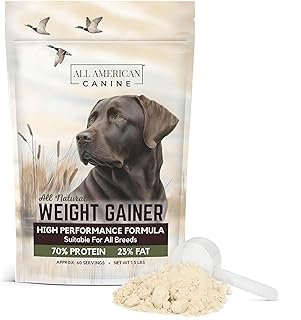
The supplied product name identifies this as a high-calorie dog weight-gainer powder with 60 servings. A powder may appeal to buyers who prefer a mix-in over a gel or chew, but the provided product information does not specify ingredients or mixing directions.
Best for: Owners specifically comparing a powder supplement format. Limitation: Review the full label for calorie amount, ingredients, and directions before use; those details are not included in the supplied listing information.
OKKÖBI Weight Gain Muscle Builder Chews

These chicken-flavored chews are marketed as an 11-in-1 muscle and weight-gain supplement. Listed ingredients include amino acids such as L-arginine and L-glutamine, plus turmeric root powder, ashwagandha, salmon oil, astaxanthin, vitamin C, and glucosamine HCL.
Best for: Owners seeking a chewable supplement with listed amino acids and added ingredients for active dogs. Limitation: Chews are not a complete dog food, and the product description alone does not establish that a dog needs muscle or weight support. Follow label directions and consult a veterinarian first.
Buying Guide: Choosing Food For Healthy Weight Gain
Should you choose food or a supplement?
Start with a complete daily diet and a measured feeding plan. Kibble or an appropriate main food is different from a gel, powder, or chew, which should be treated as a supplement unless its label says otherwise. Do not rely on treats or supplements to replace balanced meals.
How should you compare calorie information?
Compare the calories per serving or per cup on the package, then use the feeding directions and your veterinarian’s guidance. “High calorie” in a product name does not show how much energy a particular serving provides. Increase food gradually rather than making a sudden large change.
What if your dog is losing weight?
Unplanned weight loss can be related to illness, dental discomfort, parasites, appetite changes, or other causes. A veterinarian can assess body condition and help set a safe target. Seek advice before adding supplements, especially for puppies, senior dogs, pregnant dogs, or pets with health conditions.
Frequently Asked Questions
What food helps a dog gain weight?
A calorie-appropriate, nutritionally balanced dog food can support gradual weight gain when fed in a suitable amount. Choose based on your dog’s health, life stage, and veterinary advice rather than selecting food by a weight-gain claim alone.
Can I use weight-gain chews instead of dog food?
No. The listed chews are supplements, not identified as complete meals. Use them only as directed and do not replace your dog’s regular balanced food with them.
Is a high-protein food enough to make a dog gain weight?
Not necessarily. Weight change depends on total calorie intake, activity, health, and portion size. Protein content alone does not establish that a food will produce healthy weight gain.
How quickly should a dog gain weight?
There is no single safe rate for every dog. Ask a veterinarian to set a target and monitor progress, particularly if the dog is underweight or has lost weight unexpectedly.
Should I add extra food if my dog looks thin?
Check the dog’s body condition and feeding amount, but consult a veterinarian if the thinness is new, persistent, or accompanied by appetite or behavior changes. A professional can help rule out underlying causes.