The best dog weight pull harness depends on your dog’s measurements and activity: the PET ARTIST harness is a strong option for large working dogs, while the reflective X-back harness is sized for smaller dogs. The Kangdarpet X-back is aimed at Nordic breeds and multiple pulling sports. The two no-pull walking harnesses below are alternatives for leash control, not substitutes for a purpose-built weight-pulling harness.
| Product | Best suited for | Key distinction |
|---|---|---|
| PET ARTIST Dog Sled Harness | Large dogs and pulling activities | Wide webbing, reinforced stitching, and padded contact areas |
| Kangdarpet X-Back Harness | Nordic breeds and pulling sports | X-back design and broad activity list |
| Reflective X-Back Harness, Medium | Smaller dogs within listed measurements | Size guidance and reflective design in the product name |
| No Pull Harness and Leash Set | Everyday leash handling | Front and back attachment points, plus a leash |
| BARKBAY No Pull Harness | Walking and controlled handling | Listed as heavy duty, reflective, and equipped with an ID tag pocket |
PET ARTIST Dog Sled Harness

Best for: Owners of large working dogs seeking a harness for weight pulling, sledding, canicross, or ski-joring. Its listed 50 mm nylon webbing and reinforced stitching are intended for demanding pulling use. The product description states resistance up to 1,200 pounds; that figure is a material claim, not a recommended load for a dog.
Wide, soft, breathable padding at the neck and chest is intended to improve comfort during activity. These features and the range of listed pulling uses make it a relevant pick for buyers seeking a dedicated working harness rather than a walking harness.
Limitation: The supplied details do not specify sizing measurements. Confirm fit with the seller’s current sizing information before ordering.
Kangdarpet X-Back Pulling Harness

Best for: Owners looking for an X-back harness for Nordic breeds or several pulling activities. The listing names Siberian Huskies, Alaskan Malamutes, German Shepherds, and Greenland Dogs. It also describes use for sledding, dog trekking, canicross, skijoring, bikejoring, tire pulling, and resistance exercise.
The product is presented as a training harness intended to support pulling and muscle development. Choose this if the X-back style and activity range match your plans. The listing’s breed guidance is not a substitute for measuring your dog and checking the available size chart.
Limitation: The provided product details do not state webbing strength, padding materials, or specific measurements.
Reflective X-Back Harness, Medium
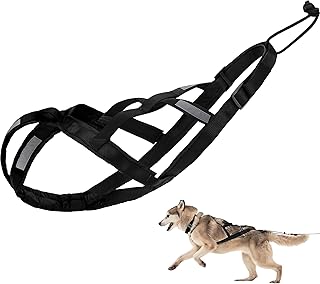
Best for: Smaller dogs that fall within the listed medium-size measurements. The stated range is a 11.5–15.5-inch neck, 21.5–29.5-inch chest, and 19–22.5-inch back; the listing recommends it for dogs around 16–33 pounds. Suggested breeds include French Bulldogs, Pugs, small Shiba Inus, Beagles, and small Corgis.
The X-back shape is described as providing pulling support. Listed activities include sledding, canicross, bikejoring, skijoring, and scootering. It is a more size-specific choice than the other pulling harness listings here.
Limitation: Weight alone is not enough to select a fit. Measure the neck, chest, and back and compare all three with the stated ranges.
No Pull Harness And 5-Foot Leash Set

Best for: Owners who need walking and leash-control equipment rather than a harness for drawing a load. The listing describes a breathable mesh harness with a front chest D-ring for training and a back O-ring for daily walks. A top handle is provided for closer control, and the set includes a 5-foot leash and a car seatbelt clip.
Choose this if your main goal is managing leash pulling on walks. The front attachment is described as redirecting a dog’s momentum without choking, which differs from the purpose of a weight-pulling harness.
Limitation: The listed features do not describe an X-back or sled-style load-distribution design. Do not treat it as a dedicated weight-pulling harness.
BARKBAY Reflective No-Pull Harness

Best for: Buyers seeking a walking harness with visibility and identification features. The supplied name describes it as heavy duty and reflective, with an ID tag pocket and easy-control design. It is listed in pink and size large.
This is an adjacent option for everyday control, not a listed weight-pulling or sledding harness. Choose it if walking features matter more than equipment for pulling sports.
Limitation: No detailed feature list or size measurements were supplied, so confirm its fit and construction details before purchase.
Buying Guide: How To Choose A Dog Weight Pull Harness
Is the harness made for pulling or walking?
For weight pulling and mushing activities, look for a purpose-built pulling design, such as an X-back style, and check the manufacturer’s instructions for intended use. A front-clip no-pull walking harness is designed for leash handling, not for drawing a load. Do not choose based on the words “heavy duty” alone.
How should you check the fit?
Measure your dog’s neck, chest, and back as directed by the product’s sizing guide. Compare each measurement with the listed range; a matching weight estimate by itself cannot confirm fit. A harness should sit securely without rubbing or restricting comfortable movement. Stop using it if you notice discomfort or a change in movement.
Which features matter for your activity?
- For large working dogs: Compare webbing, reinforcement, and padding details, as provided for the PET ARTIST model.
- For Nordic breeds and varied sports: Check whether the stated activity list and harness shape suit your planned use.
- For smaller dogs: Use the specific neck, chest, and back measurements rather than choosing by breed name alone.
- For ordinary walks: A walking harness with leash-control features may be more appropriate than a load-pulling harness.
How should weight-pulling training begin?
Introduce pulling gradually and use equipment that fits the dog and activity. Keep sessions appropriate to the dog’s condition, and seek guidance from a veterinarian or qualified trainer before adding resistance, especially if the dog has health concerns. A stated harness strength is not a safe load recommendation for an individual dog.
Frequently Asked Questions
Can a no-pull harness be used for weight pulling?
A walking harness with front and back leash attachments is not the same as a dedicated weight-pulling harness. Choose equipment specifically described for the pulling activity.
Is an X-back harness suitable for every dog?
Not automatically. Check the model’s intended uses and sizing measurements. Breed suggestions do not guarantee an appropriate fit.
Should I choose a harness by my dog’s weight?
Use weight only as supporting guidance. Neck, chest, and back measurements are important when the product provides them.
What is the difference between a pulling harness and a no-pull harness?
A pulling harness is intended for activities in which a dog draws equipment or resistance. A no-pull walking harness is intended to help manage leash behavior and handling.