Choosing the right cage for a Syrian hamster involves balancing space, ventilation, safety, and ease of cleaning. The cages below highlight options that meet these needs, from large multi‑level habitats to sturdy wooden enclosures. Each product emphasizes spacious interior, secure construction, and practical access for daily care. This guide helps American readers compare features, materials, and setup possibilities to ensure a healthy, enriched home for a small pet.
| Product | Brand | Key Benefit |
|---|---|---|
| 3-Tier Glass Hamster Tank | Onelike | Large floor space with accessible top/front doors |
| Wooden Hamster Cage 32″x16″ | DZWLKJ | Natural wood, good ventilation, multiple view angles |
| COZIWOW Wooden Hamster Cage | COZIWOW | Chewproof design and wide acrylic visibility |
| Extra Large 23″ Multi‑Tier Mcage | Mcage | Five tiers and complete accessories |
| BUCATSTATE 3.0 Cage | BUCATSTATE | Stackable, large footprint, easy assembly |
Onelike 3-Tier Glass Hamster Tank

The Onelike enclosure provides expansive floor space with 370 square inches of area, giving Syrian hamsters ample room to explore and burrow. It features an 11‑inch running wheel and includes practical accessories such as a water bottle, food dish, small hut, two platforms, and two ramps. A top door and a front door enable easy human access for feeding and inspection, while a removable upper cage simplifies cleaning. This cage is designed to support active small pets while maintaining a straightforward maintenance routine.
DZWLKJ Wooden Hamster Cage 32″ X 16″
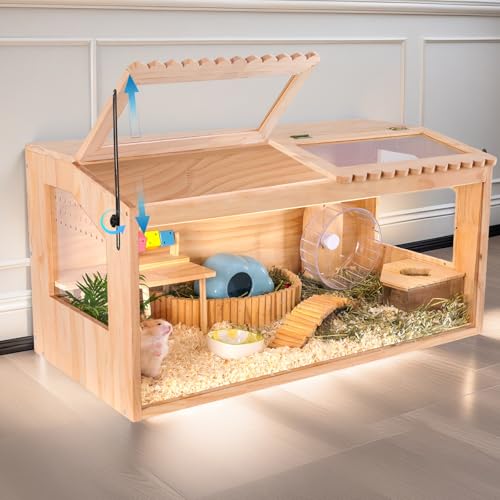
The wooden cage from DZWLKJ combines natural pine with thick acrylic panels, offering an attractive and sturdy habitat. Its dimensions (32″ L x 16″ W x 16″ H) provide generous space for tunnels, ramps, and play elements. The design emphasizes ventilation through open panels and clear acrylic views, enabling owners to watch behavior from multiple angles. The chewer‑resistant construction helps prevent nibbling on wood, and the enclosure accommodates a range of small pets, including Syrian hamsters, rats, and gerbils, with a focus on safety and observation.
COZIWOW Wooden Hamster Cage Chewproof Large Habitat

COZIWOW offers a wooden habitat designed for chew resistance and safe play. With a 31.5″ x 16.1″ x 15.7″ footprint, the cage provides ample space for digging and exploring. It emphasizes strong ventilation through a robust roof and generous gaps, while three clear acrylic walls support easy observation. Built from sturdy MDF wood and acrylic panels, the design aims to deter chewing and enhance durability. This model prioritizes safety without sacrificing visibility or roominess for larger hamsters or multiple smaller animals.
Mcage Extra Large 23″ Multi‑Tier Habitat

This Mcage habitat offers five levels of living space within a 23.5″ L x 14.5″ W x 27.5″ H footprint. It ships with a complete accessory set including a food bowl, exercise wheel, water bottle, hide house, platforms, and ladders. The design emphasizes safety with tight bar spacing and a modular layout that supports expansion with compatible Mcage accessories. A clear, translucent tube tunnel is included to connect spaces, making this option ideal for owners who want a customizable, roomy environment that grows with their pet’s needs.
BUCATSTATE 3.0 Chewproof Large Cage

BUCATSTATE’s 3.0 cage is a large, stackable habitat designed for Syrian and other small pets. Its dimensions total 47″ L x 23.6″ W x 25.5″ H, offering substantial floor space and a deep base for up to 11 inches of bedding. The design includes multiple doors for secure access and enhanced ventilation to maintain a fresh environment. It supports stacking with compatible accessories, enabling owners to create multiple, separate habitats within the same setup. The model is suitable for larger hamsters and those who enjoy tunneling and exploration while maintaining a compact footprint.
Buying Guide: Key Considerations For Syrian Hamster Cages
When selecting a Syrian hamster cage, consider space utilization, safety, accessibility, ventilation, and ease of cleaning. Syrian hamsters are active burrowers, so a larger interior with deep bedding support is ideal. Look for enclosures with secure latches, chew‑resistant materials, and solid bases to prevent digging underneath. Multi‑level designs can boost enrichment, but ensure ramps and platforms have non‑slip surfaces to minimize falls. Transparent panels or acrylic walls help owners monitor behavior, but ensure there is sufficient airflow to prevent odor buildup.
Ventilation is critical to prevent respiratory issues and maintain a pleasant habitat. Wooden cages with good ventilation can be aesthetically pleasing, but ensure that the wood is non‑toxic and properly finished to resist moisture. Plastic or glass‑based habitats often provide easier cleaning and better visibility, yet they should still prioritize airflow and escape prevention. Accessibility features such as top and front doors reduce stress during daily care and ensure safe access for feeding and cleaning without removing the entire cage.
Maintenance considerations include the ability to remove waste, collect bedding, and replace food and water easily. A removable top or front panel simplifies cleaning, while a deep base reduces spill risk and makes bedding management straightforward. Compatibility with accessories—tunnels, tubes, platforms, and chew‑safe toys—extends the cage’s lifespan and keeps hamsters engaged. Finally, assess assembly requirements; many models advertise tool‑free setup or simple snap‑in components, which saves time and reduces setup errors.
Material choice should reflect the pet’s chewing habits and safety needs. Wooden cages offer natural aesthetics and good ventilation when properly finished, but ensure non‑toxic coatings and secure acrylic panels to prevent nibbling. Glass or acrylic bases provide clear visibility and easy cleaning, though some models may be heavier or more prone to cracking if mishandled. In all cases, verify that bar spacing, door size, and hinges are appropriate for a Syrian hamster to prevent escapes and injuries.
Noise level and ecosystem considerations matter for households with nearby sleeping areas. Sturdier cages with fewer movable parts tend to minimize squeaks and rattles. If you plan to expand with more than one hamster, consider stackable designs and compatible accessories to create separate territories while conserving space. Finally, evaluate warranty and customer support options, as high‑quality cages paired with appropriate bedding and accessories support a healthier, longer life for your pet.
In summary, the best Syrian hamster cages balance generous interior space with safety, accessibility, and ease of maintenance. The options above offer varied materials and configurations to suit different homes and care routines, ensuring a secure, enriching environment for your small companion.