Finding the right 120 gallon snake tank or large reptile enclosure depends on your pet’s needs and your setup goals. This guide highlights five popular 120-gallon options, with clear pros, caveats, and buyer-focused recommendations. Each option is suited for medium-to-large reptiles such as bearded dragons, corn snakes, ball pythons, geckos, and similar species. Use the comparison notes to decide which enclosure best matches your pet’s behavior, humidity, and lighting requirements.
Phailozoo 120 Gallon Reptile Tank Review

The Phailozoo tank measures 4’x2’x2′, built to fit a variety of bioactive or simple habitat setups. It features a rust-proof mesh top that optimizes light penetration and airflow, with front sliding tempered glass doors for easy access. This enclosure emphasizes secure construction to reduce gaps that could affect temperature and humidity. It offers color options inspired by reptile aesthetics to help you tailor the habitat to your species’ natural environment.
Best for: Reptile keepers who want a wide, breathable setup with easy front access for maintenance and feeding. If you value a balance of light, airflow, and a snug enclosure that supports stable microclimates, this model fits well. Caution: Ensure you provide appropriate substrate and humidity controls if housing species sensitive to humidity fluctuations.
Herture 120 Gallon Tank With Stand

This model pairs a 120-gallon enclosure with a full storage base, including dual side compartments and a center cabinet. Front panoramic visibility comes from sliding acrylic doors, while the upper mesh lid supports airflow. The integrated stand provides convenient storage for UVB lamps, heating mats, substrates, and tools, making it a solid all-in-one choice for organized habitats.
Best for: Keepers who want a roomy tank plus built-in storage to reduce clutter and simplify care routines. Choose this if you value a clean, organized setup and straightforward feeding and cleaning. Caution: Not specified for water-heavy environments; verify humidity needs for your species before purchasing.
120 Gallon PVC Reptile Terrarium With Thermostat

This front-opening tank uses moisture-resistant PVC and includes a smart thermostat for precise temperature control from -4℉ to 212℉. It emphasizes durable insulation and easy cleaning, plus a non-slip reptile mat for grip and safety. It is well-suited for high-humidity or warm-environment species and can support varied heat sources for desert or rainforest setups.
Best for: Reptile owners who need strong moisture resistance and stable temps in humid or warm habitats. Choose this if you prioritize temperature control and easy maintenance. Caution: PVC enclosures can be heavier and may require sturdy placement to prevent tipping, especially in multi-pet homes.
Unipaws 110 Gallon Reptile Tank (Mentioned Here for Context)
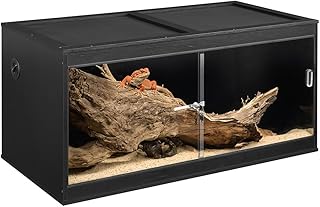
Although slightly smaller at 110 gallons, this enclosure targets bearded dragons and larger lizards. It features escape-proof sliding glass doors and a lock system with silicone gap-seal bars. The design emphasizes a panoramic view and heat retention, making it a strong option when space is a constraint but room for a spacious habitat remains a priority.
Best for: Keepers who want a large, secure display with easy sliding access. Avoid this if you specifically need a true 120-gallon footprint or high-humidity designs without extra climate control. Caution: Slightly smaller than true 120 gallons, which may affect long-term growth or space needs for some species.
120 Gallon Reptile Tank With Front Sliding Glass Doors
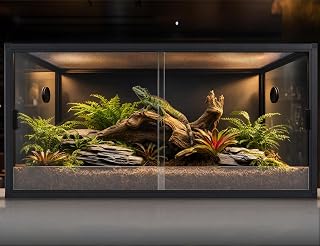
This enclosure emphasizes an aluminum alloy frame and front sliding tempered glass doors. The panoramic side panels and included glass door handles support easy feeding and viewing from multiple angles. Enhanced airflow is achieved through a rust-resistant mesh top, key for reptiles requiring robust ventilation and heat/UV lamp penetration.
Best for: Large-behavior reptiles that benefit from a wide viewing area and accessible feeding. Choose this if you want a bright, open exhibit with strong light penetration. Caution: Ensure proper UVB and heating equipment compatibility to maintain stable microclimates.
Buying Guide
Choosing the right 120 gallon reptile tank involves balancing size, airflow, lighting, humidity, and access. Consider these questions when comparing options:
- What species will inhabit the tank, and what are their humidity and temperature needs?
- Do you prefer front access doors for easy maintenance or top access for better airflow?
- Is integrated storage a priority to keep care supplies organized?
- What substrate and drainage considerations exist for your setup?
- How important is visibility and light penetration for your enclosure design?
Key Comparisons
- Best for airflow and light penetration: models with rust-proof mesh tops and front sliding doors.
- Best for integrated storage: tanks that include a stand or base cabinet.
- Best for humidity control: PVC or moisture-resistant materials with reliable sealing.
- Best for tight spaces: slightly shorter or lighter foot print while maintaining 120 gallons.
Material And Build Considerations
- Glass vs acrylic: Acrylic sides offer clearer visibility but can scratch; tempered glass is durable but heavier.
- Mesh tops: Essential for ventilation and UV/light penetration but may require extra securing to prevent escapes.
- Frame materials: Aluminum or stainless-steel frames provide durability and resistance to corrosion.
- Maintenance: Consider ease of cleaning, accessibility for feeding, and substrate changes.
Setup Tips
- Plan airflow to maintain stable humidity and temperature, especially for bioactive or rainforest setups.
- Use a thermostat or controller for precise temperature control across the 120-gallon footprint.
- Match lighting to species requirements; ensure lamps penetrate through mesh without overheating.
FAQ
- What is the typical footprint of a 120 gallon reptile tank?
Answer: Common dimensions are around 48″ x 24″ x 24″, providing substantial floor space for medium-to-large reptiles. - Are 120 gallon tanks suitable for bearded dragons?
Answer: Yes, they are suitable when paired with proper UV lighting, heat, and substrate; some models include stands for convenience. - Is PVC better than glass for humidity?
Answer: PVC generally handles higher humidity better and can offer stronger insulation, aiding temperature stability. - Should I choose a model with a stand or without?
Answer: A stand adds storage and stability; consider your room layout and cleaning access needs. - How important is a locking door?
Answer: Important for escape prevention and safety, especially with curious or agile reptiles. - Can I use any 120 gallon tank for high-humidity species?
Answer: Not always; ensure the enclosure materials and seals tolerate humidity and prevent mold growth.
| Product | Best For | Notable Feature |
|---|---|---|
| Phailozoo 120 Gallon Reptile Tank | Front-access, breathable habitat | Rust-proof mesh top, 4’x2’x2′ |
| Herture 120 Gallon Tank With Stand | All-in-one setup, organized care | Full base cabinet with storage |
| 120 Gallon PVC Reptile Terrarium | Humidity-prone environments | Smart thermostat, moisture-resistant PVC |
| Unipaws 110 Gallon Reptile Tank | Secure viewing, feeding ease | Locking glass doors, panoramic view |
| 120 Gallon Reptile Tank With Front Doors | Bright, spacious display | Front sliding doors, strong ventilation |
Summary table above highlights practical distinctions to help you compare durability, accessibility, and climate-control capabilities at a glance. When selecting, align your choice with your pet’s behavior, the room layout, and your maintenance preferences.