Automatic pet water dispensers help ensure pets stay hydrated with fresh, clean water without daily monitoring. This guide compares five popular options to fit different households and pet needs. Best for multi-pet homes, quiet setups, and easy cleaning, these dispensers offer varying capacities, materials, and features. Read on to find the right fit for cats, small dogs, and even households with several pets.
| Product | Capacity | Best For |
|---|---|---|
| PawsPik PureFlow MAX Automatic Water Dispenser | 3.2 L | Small to medium pets in single-pet or multi-pet homes |
| Cordless Wider Tray Dog Water Fountain (8L) | 8 L | Multiple pets; unsupervised setups; longer intervals between fills |
| PETIMI Ceramic Cat Water Fountain | 3 L | Cats and small dogs; quiet operation; easy cleaning |
| Petgravity Smart Cat Water Dispenser | 3.5 L | Cats and small animals; upgraded self-refill feature |
| Amazon Basics Gravity Pet Water Dispenser | 135.3 fl oz (≈ 4 L) | Budget-conscious; simple gravity-fed design |
PawsPik PureFlow MAX Automatic Water Dispenser

Best for households that want a stainless steel design with a mid-size capacity. The PawsPik PureFlow MAX emphasizes long-lasting hydration with a curve design that reduces splashing, making it suitable for cats and small to medium dogs. This option is well-suited for owners who want a durable, easy-to-clean fixture without frequent refills.
Who it’s best for: single-pet households or small multi-pet homes where space is limited. Limitations: capacity may require more frequent refills in very large families or multi-pet households.
Cordless Wider Tray Dog Water Fountain
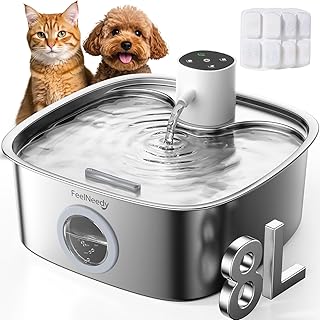
Best for households with multiple pets or where continuous water availability is a priority. The cordless, battery-operated design with a large 8L capacity helps reduce refills and is suitable for bigger families. A potential drawback is the need to monitor battery life and charge cycles in very busy homes.
Who it’s best for: larger households with several pets; homes needing a longer interval between fills. Limitation: battery management may be required for constant, heavy use.
PETIMI Ceramic Cat Water Fountain

Best for cats and small dogs seeking quiet operation and a BPA-free option. The PETIMI Ceramic Fountain emphasizes easy cleaning and included filters for better water taste. This model is a good pick for owners who prioritize a quiet experience and a ceramic surface that resists staining.
Who it’s best for: households with noise-sensitive pets; cat-focused homes. Limitation: smaller capacity may require more frequent refills for several pets.
Petgravity Smart Cat Water Dispenser

Best for cats and small animals that benefit from a self-refilling system. The Petgravity model uses a stainless steel bowl and an upgraded refill mechanism to maintain a steady water supply. Consider this option if you prefer a modern design with continuous hydration for a small household.
Who it’s best for: cat households with multiple pets or minimal refills; users who want a sleek stainless option. Limitation: may be more complex to set up than basic gravity dispensers.
Amazon Basics Gravity Pet Water Dispenser

Best for budget-minded buyers seeking a simple gravity-fed system. The Amazon Basics Gravity Dispenser offers a transparent container for quick level checks and anti-skid feet for stable placement. This choice is straightforward and low-maintenance, ideal for basic hydration needs.
Who it’s best for: first-time automatic dispenser users; households that want a simple, reliable solution. Limitation: lower-tech design means fewer features and potentially more frequent refills than larger capacities.
Buying Guide: Key Purchase Considerations
Capacity And Pet Count
Choose a dispenser with enough capacity to reduce frequent refills in households with more than one pet. Larger families typically benefit from 6–8 liter ranges or higher, while single-pet homes can manage with 3–4 liter options.
Material And Cleanability
Stainless steel and ceramic bowls resist staining and are easier to sanitize. Plastic bases can be lighter and cheaper but may stain or retain odors. Look for removable, dishwasher-safe components for easy cleaning.
Power And Operation Style
Cordless or battery-powered units offer placement flexibility but require charging. Gravity-fed models are simplest and most reliable but may require regular refills. Consider noise level and spill reduction features for sensitive pets.
Spill Reduction And Stability
Anti-skid feet, secure basins, and enclosed sipping zones help minimize spills. If you have hardwood floors or multiple active pets, prioritize stability features and splash-proof designs.
Filters And Water Quality
Some fountains include filters to improve water taste and hygiene. If choosing a model with filters, plan for replacements and access to fresh supplies.
Maintenance Frequency
Frequent disassembly and cleaning are common with automatic fountains. Models with fewer crevices and dishwasher-safe parts save time and effort.
FAQ: Quick Answers For Buyers
- What size dispenser should I get for two cats? A 3–4 liter model is usually sufficient, but consider higher capacity if you want fewer refills.
- Are ceramic fountains better than plastic? Ceramic and stainless steel are typically easier to clean and resist staining, making them a hygienic choice.
- Do battery-powered fountains work well with multiple pets? They can, but you’ll need to monitor battery life and charges in high-use households.
- Is a gravity-fed dispenser okay for a large dog? Gravity-fed models work for small to medium pets; larger dogs may require higher capacity or a more robust system.
- How often should I replace the filters? Follow the manufacturer’s guidance; typical intervals range from a few weeks to a few months depending on use.
- Which material is easiest to clean? Stainless steel and ceramic options are generally the easiest to sanitize and maintain.