Choosing a reliable dewormer for puppies is essential for early health and ongoing well-being. This guide highlights five widely used options, covering liquid and chewable forms, and explains key considerations like puppy age, weight, worm types, and ease of administration. All featured products are veterinary-appropriate for young dogs when used as directed. Always consult a veterinarian before starting a deworming plan, especially for puppies under 6 weeks or underweight puppies.
| Product | Brand | Notes |
|---|---|---|
| PetArmor 7 Way Chewable (Small Dogs) | PetArmor | Chewable tablets for small dogs; treats 7 worm species. |
| PetArmor Sure Shot Liquid De-Wormer | PetArmor | Liquid formula for roundworms and hookworms; easy dose based on weight. |
| Safe-Guard 9 Pouches | SAFE-GUARD | Fenbendazole-based granules; multiple worms covered; convenient pouch format. |
| Panacur C Canine Dewormer (1 Gram, 3 Count) | Panacur | Fenbendazole tablets; treats multiple worms; weight-based dosing. |
| Pro-Sense Safe-Guard 4 | SAFE-GUARD | Granules for easy mixing into food; broad-spectrum protection. |
PetArmor 7 Way Chewables For Small Dogs

PetArmor 7 Way Chewable dewormer for small dogs is designed to treat seven worm species, including common tapeworms, roundworms, and hookworms. Formulated for puppies 12 weeks or older and small dogs weighing between 6.0 and 25 lbs, these chewables combine convenience with a broad-spectrum approach. The chewable format supports easier administration for pet owners who prefer not to use liquids. For puppies in the weight range, dosing is straightforward, typically taking effect over a short treatment period. PetArmor emphasizes vet-quality formulation in a palatable, chewable form to encourage consistent use. This product is suitable as part of a broader deworming plan prescribed by a veterinarian.
PetArmor Sure Shot Liquid De-Wormer

This vet-quality liquid dewormer is designed to remove four worm species and help prevent reinfestation of large roundworms. Suitable for puppies two weeks and older, as well as dogs of all sizes, it offers flexible dosing by weight. Administration is straightforward: mix into food or offer with a syringe, making it a practical choice for owners who struggle with pill administration. Always measure accurately and complete the full course as directed by a veterinarian. While convenient, liquids require careful handling to ensure the correct dosage for your puppy’s specific weight.
Safe-Guard 9 Pouches Dewormer

Safe-Guard dewormer uses fenbendazole to target a broad range of intestinal worms, including Taenia tapeworms, hookworms, roundworms, and whipworms. The pouch formulation simplifies dosing, allowing caregivers to mix the granules into food with minimal fuss. It is suitable for puppies six weeks and older and for pregnant dogs, depending on veterinary guidance. This option can be a practical choice when treating multiple dogs or when ease of administration is a priority. Safety and proper dosing should be confirmed with a veterinarian to avoid under- or over-treatment in young puppies.
Panacur C Canine Dewormer (1 Gram, 3 Count)
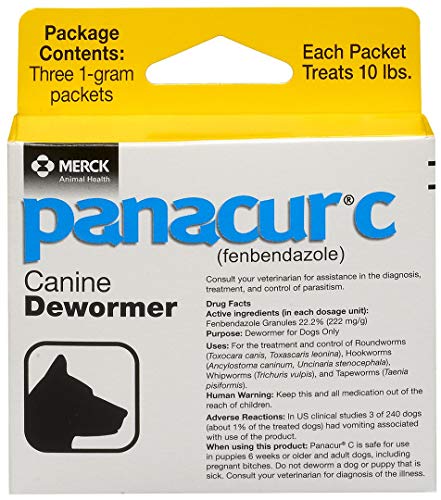
Panacur C contains fenbendazole and is designed to treat and control common canine worms, including roundworms, hookworms, whipworms, and tapeworms. Each pack covers a specific weight range, with dosing instructions based on body weight. The product is suitable for pregnant dams and can be part of a broader puppy deworming program. As with all anthelmintics, adherence to dosing schedules and veterinarian guidance are essential to ensure effectiveness and to minimize potential resistance or adverse reactions in young dogs.
Pro-Sense Safe-Guard 4 Canine Dewormer

Pro-Sense Safe-Guard 4 provides a three-day treatment option that targets common intestinal worms, with easy-to-mix granules suitable for puppies over six weeks and pregnant dogs. This product emphasizes simple administration and compatibility with a variety of feeding routines, helping ensure puppies receive the full course. It is important to follow exact dosing instructions and to consult a veterinarian if there is any concern about the puppy’s weight, age, or health status before starting treatment.
Buying Guide: Key Purchase Considerations For Puppy Deworming
- Puppy age and weight: Select a product appropriate for the puppy’s age and body weight. Some formulas are designed for very young puppies, while others are targeted at small or larger breeds.
- Worm types covered: Look for broad-spectrum dewormers that address roundworms, hookworms, whipworms, and tapeworms where possible. Some products target a subset of these.
- Administration method: Chewables are convenient for many owners, liquids can be easier for very small puppies, and granules mixed into food suit households with picky eaters.
- Safety and vet guidance: Always use dewormers under veterinary guidance, especially for puppies under 6 weeks or underweight puppies to avoid under-treatment or adverse reactions.
- Pregnancy considerations: Some formulations are labeled as safe for pregnant dogs; verify pregnancy status with a veterinarian before treating.
- Resistance and dosing schedule: Complete the full recommended course even if symptoms disappear, and adhere to dosing intervals to reduce resistance risk and ensure effective control.
- Combining products: Do not double-dip by using multiple products simultaneously unless advised by a veterinarian, as this can lead to overdose or drug interactions.
- Storage and shelf life: Store dewormers as directed by the label, away from children and pets, and check expiration dates before use.
- Cost and convenience: Weigh cost per treatment and convenience of administration when choosing a product that fits your routine and your puppy’s needs.
- Veterinary plan alignment: Use these products as part of a broader parasite control plan that includes hygiene, environment management, and routine checkups.