Answering the needs of cat owners and caregivers who want durable, weatherproof shelters, this guide highlights top outdoor cat houses that keep cats dry, warm, and safe. The best options suit feral or community cats, domestic outdoor cats, and households needing easy setup or simple cleaning. Read on to compare features, best-use scenarios, and practical buying tips. A quick reference table below summarizes the five top picks.
| Product | Best For | Key Benefit |
|---|---|---|
| Tailtastic Weatherproof Outdoor Cat House | Feral/Community Cats | Seamless bottom, all-weather insulation |
| Outdoor Cat House Weatherproof, Resin Cat Houses | Domestic Outdoor/Indoor Cats | Resin, easy to clean, flat top for storage |
| New Age Pet ECOFLEX Albany Outdoor Cat House | Multi-cat or feral colonies | Durable ECOFLEX, quick assembly |
| Outdoor Cat House with Insulated Liner | Winter-ready shelter | Six-sided insulation, elevated base |
| Outdoor Cat House for Winter-Weatherproof Stray Cats | Extreme cold outdoor shelters | Ground stakes, aluminum foil insulation |
Tailtastic Weatherproof Outdoor Cat House

The Tailtastic cat house features a seamless bottom and roof design to block ground moisture, keeping cats dry in rain or snow. It uses a high-density, water-resistant Oxford fabric with an insulated inner layer for warmth in cold weather. Assembly requires no tools, using Velcro fasteners for wind resistance. Best for feral or community cats needing a durable, all-weather shelter. Caution: ensure adequate airflow and consider elevating the shelter off damp surfaces to maximize dryness.
Outdoor Cat House Weatherproof, Resin Cat Houses
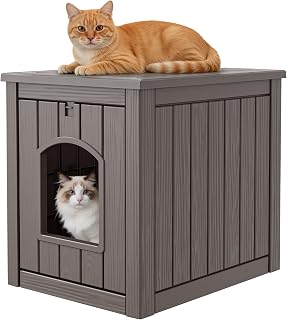
This resin cat house blends a weatherproof exterior with a flat top for convenient storage or placements of small items. Its non-toxic, scratch- and fade-resistant materials provide long-term durability in sun and rain. Best for households that want an easy-to-clean shelter with a discreet, garden-friendly look. Limitation: resin, while sturdy, may retain heat in direct sun; place in a shaded area to maintain comfort.
New Age Pet ECOFLEX Albany Outdoor Cat House, Maple/Brown

Constructed from ECOFLEX, this maple/brown shelter resists warping, cracking, and moisture. It includes insulating air pockets and a raised floor to keep cats off cold ground. Dual escape doors support feral and multi-cat colonies, enhancing safety. Ideal for long-term outdoor use and easy to clean with minimal maintenance. Choose this if you need a robust, weather-ready structure that supports multiple cats. Caution: assembly is quick but check door flaps for proper alignment to ensure escape routes function smoothly.
Outdoor Cat House with Insulated Liner

This design uses a six-sided insulated liner and a two-layer structure to maximize warmth. The elevated, waterproof base and slanted roof help shed rain and snow, keeping the interior dry. It’s well-suited for feral or outdoor pets needing reliable warmth in winter. Best for cold climates or when you want a sturdy wooden frame with strong insulation. Limitation: wooden shelters can require occasional maintenance to ensure seals stay intact in extreme weather.
Outdoor Cat House for Winter-Weatherproof Stray Cats

Designed for winter use, this shelter includes an elevated design with ground stakes and aluminum foil insulation. The materials resist wind, moisture, and cold, providing a dry, warm space for stray or feral cats. Best for areas with heavy snowfall or persistent cold. Choose this if you need sturdy winter protection and a simple setup. Caution: ensure stakes are securely anchored in loose soil or hard surfaces to prevent shifting in strong winds.
Buying Guide
What materials matter for outdoor cat houses?
Look for water-resistant fabrics, insulated liners, and sealed bottoms to prevent ground moisture. Durable materials like resin, ECOFLEX, or treated wood improve longevity in rain, snow, and sun. Consider whether you prefer a lightweight, portable option or a heavier, more permanent shelter.
Weatherproof vs. insulated: what’s the difference?
Weatherproofing keeps rain and wind out, while insulation retains body heat. For cold climates, prioritize combined weatherproofing and insulation. For feral shelters, seamless construction helps prevent moisture intrusion, while elevated bases reduce ground dampness.
Is assembly easy and maintenance-friendly?
Tool-free assembly with Velcro or snap-fit connections simplifies setup and relocation. Wipe-clean surfaces or washable liners save maintenance time. Flat tops can provide extra storage or space for treats and accessories.
Where should you place an outdoor cat house?
Choose shaded, wind-protected spots to reduce exposure. Elevate shelters off the ground to prevent dampness. If possible, position away from predators and in a location accessible to caregivers for regular checks and feeding.
One shelter or multiple for colonies?
For feral colonies, multiple access points and escape routes improve safety and reduce territorial tension. Shelters with raised floors and insulated interiors support more cats and longer use across seasons.
Practical considerations for safety and care
Ensure proper drainage around the shelter, secure anchoring on windy days, and routine cleaning to prevent odors or pest issues. If cats are sensitive to odors, choose materials with lower odor buildup and easy cleaning protocols.
FAQ
- Are outdoor cat houses safe for feral cats? Yes. Look for shelters with escape routes, robust construction, and insulation to protect against cold and moisture.
- How do I clean an outdoor cat house? Wipe surfaces with a damp cloth, and use mild soap if needed. Choose washable liners or removable components for easier cleaning.
- Can these shelters prevent humidity inside? Elevation, sealed bottoms, and insulation minimize internal humidity and heat loss, especially with good ventilation.
- Where is the best place to install one? A shaded, wind-protected, dry area, elevated from the ground, with easy caregiver access for maintenance.
- Should I insulate all shelters in winter? Insulation significantly helps in cold climates; for mild regions, weatherproofing may suffice, but insulation adds comfort for prolonged exposure.
- Do the shelters require tools for assembly? Some models are tool-free, using Velcro or snap fittings; others may involve basic assembly with included hardware.