The best cat collar after surgery is one that fits securely and prevents your cat from licking the specific wound. The H HIDREAM flower cone is suited to cats that need a wider barrier while eating and drinking; Hpetppy and Seyezo offer soft, donut-style options for upper-body wounds; Depets provides a lightweight plastic cone with stated depth; and QIYADIN uses adjustable fabric with a Velcro closure. Measure your cat and consider wound location before choosing. Follow your veterinarian’s instructions about when to use a recovery collar.
| Product | Best for | Key consideration |
|---|---|---|
| H HIDREAM Waterproof Flower Cone | A wider barrier and everyday activity | Check neck size and listed weight range |
| Hpetppy Soft Donut Collar | Soft protection for upper-body wounds | May not protect lower-body wounds |
| Depets Plastic Recovery Cone | Small cats needing a deeper cone | Small size fits a narrow neck range |
| QIYADIN Soft Fabric Cone | Adjustable fabric fit | Use its size chart to select a size |
| Seyezo Cotton Donut Collar | Soft wear for upper-body wounds | Hand washing is recommended |
H HIDREAM Waterproof Flower Cone

Best for: Cats needing a wider, adjustable cone intended to limit access to wounds, including some lower-limb wounds. The listing says this style is designed to let pets eat, drink, and play, and identifies grooming, nail trimming, and deworming as other uses.
The medium size is listed for a 6.5- to 10.5-inch neck circumference and pets weighing less than 6–11 pounds. Measure your cat before ordering and follow the seller’s sizing guidance. The adjustable elastic helps secure the fit.
Limitation: A cone’s stated coverage does not guarantee it will block access to every wound. Check whether your cat can reach the surgical area while wearing it.
Hpetppy Soft Donut Collar

Best for: Cats with upper-body wounds whose owners want a soft, lightweight alternative to a traditional plastic cone. The collar is cotton-stuffed, uses an adjustable elastic band, and is described as allowing normal eating, drinking, and play without blocking the pet’s view.
It comes in three sizes. The listed small size fits a 5.1- to 8.6-inch neck circumference and pets weighing less than 4.4 pounds. Measure both head and neck as the listing advises, and choose based on fit rather than weight alone.
Limitation: The seller notes that this design may not be effective for lower-body wounds. Avoid choosing it without checking whether your cat can reach the incision or injury.
Depets Adjustable Plastic Recovery Cone

Best for: Small cats, kittens, or rabbits that need a lightweight plastic cone with stated depth. Depets lists a 4.1-inch cone depth for this small size and says the design is intended to prevent licking. Its adjustable neck circumference and quick open-and-close feature may make putting it on and removing it less stressful.
The small size fits a neck circumference of 5.3 to 6.8 inches. The plastic is described as easy to clean, with a soft fabric edge for comfort.
Limitation: The small size is specifically described as suitable for thin cats, kittens, and rabbits, and not for dogs. Its narrow neck range makes measuring essential.
QIYADIN Adjustable Soft Fabric Cone

Best for: Cat owners seeking a soft fabric collar with an adjustable closure. The listing describes breathable, durable high-density twill composite fabric with soft edging. A Velcro design lets the inner diameter be adjusted, which can help achieve a closer fit than a fixed-size collar.
Four sizes are available, and the seller recommends using the size chart shown in the product images. It is described as suitable for almost all cats and some puppies. Choose this option if a fabric construction and adjustable neck opening are priorities.
Limitation: The provided listing details do not specify neck measurements for the medium size. Check the size chart and make sure the collar prevents access to the wound before relying on it.
Seyezo Soft Cotton Donut Collar
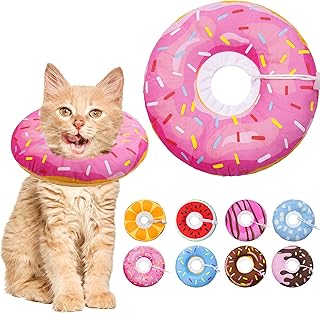
Best for: Small cats needing a soft cotton collar for upper-body wound protection. The adjustable strap is designed to secure the collar around the neck, and the listing also describes use during grooming, nail trimming, and veterinary visits.
The small size is listed for a 5.1- to 8.6-inch neck circumference and pets weighing 2.2–4.4 pounds. Measure your cat before ordering. The seller recommends hand washing to help preserve the collar’s condition.
Limitation: The listing says the collar is more helpful for upper-body wounds and suggests considering a larger size for lower-body injuries. Verify coverage for your cat’s wound rather than assuming a donut shape will block licking everywhere.
Buying Guide: How to Choose a Cat Collar After Surgery
Which collar style matches the wound location?
Start with the location of the incision or injury. Soft donut-style collars such as Hpetppy and Seyezo are presented as better suited to upper-body wounds, and their listings caution that lower-body coverage may be limited. A cone-style design may provide a different barrier, but fit and your cat’s reach matter more than the style name. Check whether your cat can still bend around the collar and reach the surgical area.
How should you measure your cat?
Measure neck circumference and compare it with the exact size range listed for the product. Some designs also advise measuring the head. Do not rely on weight alone: two cats with similar weights can have different neck sizes. A collar should be secure without appearing too tight. If the product’s size chart is unclear, confirm sizing with the seller or your veterinarian before ordering.
What matters for comfort and daily care?
Soft fabric may feel less rigid, while a plastic cone may offer a more defined barrier and can be easier to wipe clean, according to the product descriptions. Consider whether your cat can eat and drink comfortably, and monitor how the collar affects movement. If it interferes with eating, drinking, breathing, or safe movement, contact your veterinarian for guidance rather than modifying it in a way that reduces protection.
How do you compare fit and protection?
Use the listed neck range, cone depth or diameter when provided, closure type, and stated wound limitations to compare options. A wider or deeper shape may help limit access, but no listing guarantees that a specific design will protect every wound on every cat. Recheck fit and coverage after putting the collar on, and follow post-surgery instructions from the veterinary team.
Frequently Asked Questions
How long should a cat wear a recovery collar after surgery?
Follow the veterinarian’s instructions. The appropriate duration depends on the procedure and the cat’s healing progress; do not remove the collar early without veterinary guidance.
Can a cat eat and drink while wearing a collar?
Some listings say their soft or flower-style collars allow eating and drinking, but individual fit and mobility vary. Supervise your cat and ask the veterinarian if access to food or water is difficult.
Is a soft donut collar suitable for every incision?
No. The Hpetppy and Seyezo listings caution that donut-style collars may be less useful for lower-body wounds. Check wound coverage and ask your veterinarian if uncertain.
Should I choose a collar by my cat’s weight?
Use the product’s neck measurements and sizing guidance first. Weight ranges are additional guidance, not a substitute for measuring your cat.
What should I do if my cat can still lick the wound?
Contact your veterinarian for advice about fit or another protective option. Do not assume a collar is effective if your cat can reach the incision.