Hyperthyroidism is a common condition in cats that affects metabolism and energy. Choosing the right cat foods and supplements can support thyroid health, heart function, and overall well‑being. This guide highlights five relevant products that address thyroid concerns, featuring both prescription diets and holistic options. The selections focus on clinically supported nutrition, safe weight management, and easy incorporation into daily feeding routines.
Summary of chosen products:
| Product | Brand | Form | Key Benefit | Link |
|---|---|---|---|---|
| y/d Dry Cat Food (4 lb) | Hill’s Prescription Diet | Dry | Clinically proven to reduce thyroid hormone production | Amazon link in product section |
| y/d Dry Cat Food (8.5 lb) | Hill’s Prescription Diet | Dry | Long-term thyroid management when fed exclusively | Amazon link in product section |
| y/d Wet Cat Food (5.5 oz cans, 24-pack) | Hill’s Prescription Diet | Canned | Same clinically proven thyroid control in a moisture-rich option | Amazon link in product section |
| Thyroid Support Gold for Cats | Pet Wellbeing | Liquid | Herbal, holistic support for thyroid balance | Amazon link in product section |
| Weight Gainer & Thyroid Support | BestLife4Pets | Pills | Gentle appetite and weight support alongside thyroid balance | Amazon link in product section |
Hill’s y/d Thyroid Care Dry Cat Food — 4 lb

Hill’s Prescription Diet y/d Thyroid Care Dry Cat Food is specially formulated by Hill’s nutritionists and veterinarians to manage an overactive thyroid. It is the only clinically proven nutrition to decrease thyroid hormone production in 3 weeks when fed as the sole source of nutrition. Consistent, long-term feeding is critical to efficacy, making it a preferred option under veterinary supervision for cats with thyroid imbalance.
Key features include controlled phosphorus and reduced sodium with omega-3 fatty acids from fish oil, supporting kidney and heart health. This dry formulation is designed for cats needing strict thyroid management, and it integrates easily into daily routines when a prescription diet is prescribed by a veterinarian.
Hill’s y/d Thyroid Care Dry Cat Food — 8.5 lb

This larger dry option provides the same clinically proven thyroid management benefits as the smaller bag. Hill’s Prescription Diet y/d is designed to reduce thyroid hormone production when fed exclusively, so guidance from a veterinarian is essential to determine suitability and duration of therapy. The formulation also emphasizes kidney and heart health through regulated minerals and added omega-3s.
For households managing multiple cats or seeking extended supply, the 8.5 lb bag can lower replacement frequency while maintaining the same thyroid-supporting nutrition, provided it remains the sole nutrition source as directed by a veterinary professional.
Hill’s y/d Thyroid Care Wet Cat Food — 5.5 oz Cans (24-Pack)
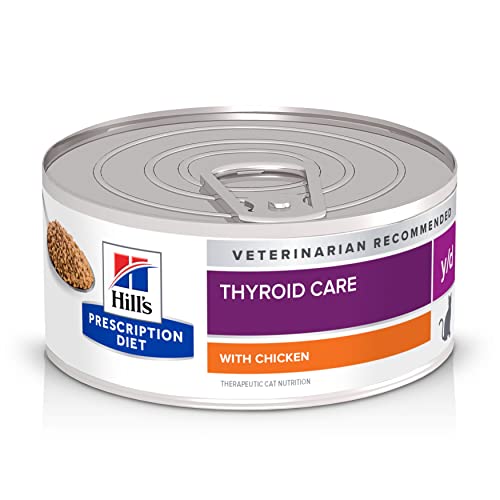
This canned option provides the same thyroid-targeted nutrition as the dry formula, offering moisture that can aid hydration and palatability for cats with thyroid issues. The product is designed to decrease thyroid hormone production when fed as the sole source of nutrition and is supported by omega-3 fatty acids for cardiovascular and kidney-friendly health.
While some cats prefer wet food due to flavor or texture, consistent, exclusive feeding remains essential. It is important to transition under veterinary guidance to ensure the thyroid-support regimen meets the cat’s specific needs.
Thyroid Support Gold for Cats — Pet Wellbeing

Pet Wellbeing Thyroid Support Gold is a holistic liquid formula featuring Bugleweed and Lemon Balm, designed to support-normal thyroid hormone levels and healthy metabolic function. This NASC-certified, vet-formulated supplement aims to balance endocrine activity while promoting consistent appetite and coat health. It is intended as a complementary approach alongside veterinary-recommended diets rather than a standalone treatment.
Herbal-based thyroid support may appeal to owners seeking non-conventional options, but it should be used under professional guidance to ensure compatibility with existing thyroid management plans and other medications.
Cat Weight Gainer & Thyroid Support — BestLife4Pets
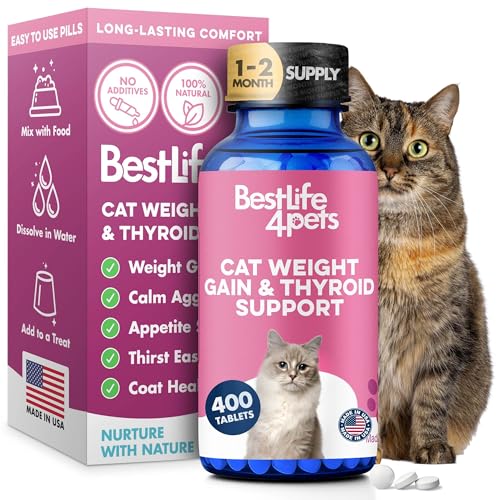
This natural appetite stimulant and weight gainer offers a gentle option for cats showing restlessness, poor appetite, or weight loss, which can accompany thyroid imbalance. The product uses plant-based ingredients and is designed to be easier to dose and digest than heavy pastes or calorie-dense foods. It complements a thyroid-focused plan by supporting appetite and energy without harsh additives.
Buying Guide: Key Purchase Considerations
- Diagnosis and veterinary guidance: Hyperthyroidism requires veterinarian oversight. Prescription diets like Hill’s y/d should be used only under veterinary direction, with regular monitoring of thyroid hormone levels and kidney function.
- Diet form and palatability: Some cats prefer dry kibble, others prefer wet cans. When switching to a thyroid-focused diet, gradual transition is recommended to minimize stress and ensure acceptance.
- Long-term feasibility: Prescription diets are often intended for long-term management. Consider availability, bag sizes, and the practicality of exclusive feeding for extended periods.
- Complementary therapies: Herbal or holistic supplements can be considered but should be discussed with a veterinarian to avoid interactions or interference with thyroid treatment.
- Monitoring and adjustments: Regular vet visits for thyroid panels, kidney function, and weight tracking help determine if the chosen product remains appropriate or needs adjustment.
- Weight management: Some cats with thyroid imbalance lose weight; others gain weight after treatment. Choose a plan that supports healthy weight with appropriate caloric control and nutrient balance.
- Quality and safety: Look for NASC certification, clear ingredient labeling, and evidence-based claims. Avoid products with unnecessary fillers or potential adverse additives.
- Cost and accessibility: Prescription options may have higher ongoing costs and require ongoing vet supervision. Explore alternatives if a recommended product is not feasible.
In summary, addressing feline hyperthyroidism involves targeted nutrition, veterinary oversight, and careful monitoring. The products highlighted above provide a mix of prescription diets and holistic supports to align with different owner preferences and cat needs. Always consult a veterinarian before starting, stopping, or changing a thyroid-focused regimen.