The best way to clean a dog’s eyes and help reduce tear stains is to gently remove discharge and moisture with a product made for the eye area. Presoaked wipes are convenient for routine cleanup, a rinse is an option for flushing debris when used as directed, and a comb or powder can support coat care. The five picks below match different needs: Angels’ Eyes for textured stain-removal pads, Earth Rated for larger unscented wipes, Nutri-Vet for a liquid rinse, PETHROOM for grooming, and Eye Envy for keeping fur dry.
| Product | Best For | Format |
|---|---|---|
| Angels’ Eyes | Wiping visible buildup | Presoaked pads |
| Earth Rated | Everyday cleaning with broad coverage | Large wipes |
| Nutri-Vet | Rinsing the eye area | Liquid rinse |
| PETHROOM | Removing debris from facial hair | Fine-tooth comb |
| Eye Envy | Absorbing moisture around the eyes | Powder |
Angels’ Eyes Tear Stain Wipes
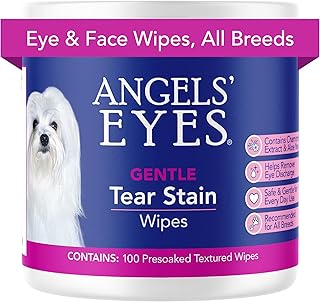
These presoaked, textured pads are designed to wipe away dried mucus, discharge, and tear stains from the fur around a dog’s eyes. The product description says that wiping away tears before they oxidize can help reduce stain buildup, crust, and discoloration.
Best for: Owners who want a ready-to-use pad for routine cleanup and visible residue. The textured format is a practical choice when a smooth wipe does not lift dried material easily.
Limitation: These are external-use wipes, not a liquid eye rinse. Follow the label and keep the pad from rubbing directly on the eye.
Earth Rated Large Unscented Eye Wipes

Earth Rated’s wipes are vet-developed, unscented, and made for cleaning dirt, discharge, and debris around a dog’s eyes. Each wipe measures 5 by 5 inches; the product description compares this with standard 2.5-by-2.5-inch wipes. The formula is described as having 98% natural-origin ingredients.
Best for: Everyday maintenance or owners who prefer a larger wipe that covers more area in fewer passes. The unscented format may also suit buyers avoiding fragranced grooming products.
Limitation: A larger wipe can be more than needed for a small spot. Use a clean section for each eye to avoid transferring debris.
Nutri-Vet Dog Eye Wash

This 4-ounce product is a liquid eye rinse rather than a wipe. Its description says it is intended to address irritation associated with seasonal allergens, smog, pollen, and foreign particles, and to help prevent tear stains. It lists boric acid as an ingredient.
Best for: Owners looking for a rinse format to use according to the product directions, particularly when loose debris is the concern. Choose this instead of a comb when the goal is liquid cleansing.
Limitation: Product claims do not replace veterinary care. Do not use an eye product to self-treat a suspected infection or persistent irritation; ask a veterinarian what is appropriate.
PETHROOM Stainless Steel Eye Comb

This compact grooming tool has 60 fine, rounded teeth made of stainless steel. It is designed to remove stains, dirt, and debris caught in facial hair, and its lightweight size makes it convenient for quick grooming touch-ups.
Best for: Dogs with residue caught in the coat around the eyes, especially when the fur needs gentle grooming after cleaning. It complements wipes or a rinse rather than replacing them.
Limitation: A comb is a grooming tool, not a cleanser. Use carefully around sensitive areas, and stop if your dog moves suddenly or shows discomfort.
Eye Envy Tear Stain Remover Powder

Eye Envy’s powder is designed to absorb moisture and help keep the fur around the eyes dry. The product description recommends daily use initially and weekly use after stains are removed. It can be applied with a fingertip or an applicator brush.
Best for: Owners focused on managing moisture in the fur as part of an ongoing grooming routine. The powder offers a different approach from wet wipes and can be used after the area is clean and dry.
Limitation: This is not a substitute for removing fresh discharge or flushing debris. Follow the label carefully and keep powder out of the eyes.
Buying Guide: Choosing Eye-Care Products For Dogs
Should you choose wipes, rinse, powder, or a comb?
Choose wipes for quick surface cleaning and routine removal of discharge. A rinse is a liquid option for flushing, but it should only be used according to its label. A comb helps remove material caught in facial hair after cleaning. Powder is intended to absorb moisture and support coat care; it does not replace cleaning.
How do you clean a dog’s eyes safely?
Use a product specifically intended for the eye area and follow its directions. Wipe gently around the eye rather than pressing on the eyeball, and use a fresh pad or clean wipe section as needed. Avoid pulling at crusts or using a comb close to the eye if your dog is moving. Stop if your dog seems uncomfortable.
What matters most for tear stains?
Regularly cleaning away tears and discharge can help reduce the buildup that stains fur. Select a format you can use consistently and safely. A product may help clean or manage stained hair, but it may not address why a dog is tearing. Persistent or newly increased tearing deserves veterinary advice.
When should a veterinarian examine your dog?
Contact a veterinarian if tearing continues, the eye looks red or swollen, discharge is unusual, your dog squints or paws at the eye, or cleaning seems painful. Eye problems can need diagnosis and treatment; grooming products should not be treated as a cure for infection or injury.
Frequently Asked Questions
Can tear stains be wiped away?
Wipes can remove surface discharge and some residue from the fur. Older discoloration may not disappear with one cleaning, and ongoing tearing can cause new staining.
Are dog eye wipes the same as eye drops?
No. Wipes clean around the eye, while a rinse is a liquid product. Use either only as directed for its intended purpose.
How often should I clean my dog’s eyes?
Follow the product label and your veterinarian’s advice. The appropriate routine can vary depending on your dog’s needs and how much discharge is present.
Can I use a tear-stain comb by itself?
A comb can remove debris from facial hair, but it does not wash the area or address the cause of tearing. Use it gently and keep it away from the eyeball.
Do tear-stain products treat eye infections?
Do not assume that a grooming product treats an infection. A veterinarian should evaluate suspected infection, persistent irritation, or other concerning eye symptoms.