For dogs with diabetes, the best treat is one your veterinarian approves and whose ingredients and serving size fit your dog’s care plan. Among these options, Old Dog Cookie Company’s treats stand out for their stated 2 calories per bite and no-added-sugar formula; Pet Kitchen emphasizes low-glycemic pumpkin treats, while Portland Pet Food lists 12 calories per biscuit. These products are not a substitute for veterinary guidance, and “diabetic-friendly” on a label does not guarantee suitability for an individual dog.
| Product | Best suited for | Listed detail |
|---|---|---|
| Old Dog Cookie Company Tiny Treats | Very small rewards | 2 calories per treat; no added sugar |
| Pet Kitchen Pumpkin Biscuits | Owners seeking low-glycemic pumpkin treats | Vegan and gluten-free |
| Portland Pet Food Pumpkin Treats | Measured everyday rewards | 12 calories per cookie |
| Bocce’s Bakery Crispies | Shoppers considering a crisp snack | Peanut butter and blueberry flavor |
| Shameless Pets Meaty Tenders | Owners comparing soft treats | Soft treats in a variety pack |
Old Dog Cookie Company Tiny Treats
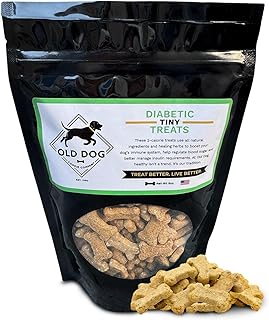
Best for: Owners who need small, calorie-countable rewards and want a product specifically marketed for diabetic dogs. The supplied product details state that each bite-sized cookie has 2 calories, contains no added sugar, and includes pumpkin puree, dandelion, kelp, apple, and alfalfa. It is also described as having no preservatives, added salt, or artificial chemicals.
The small stated calorie amount may make it easier to account for treats within a daily feeding plan, but it does not establish that the recipe is appropriate for every diabetic dog. Review the full label with your veterinarian, particularly if your dog has other dietary needs.
Pet Kitchen Low-Glycemic Pumpkin Treats

Best for: Buyers looking for pumpkin treats described by the maker as low glycemic, vegan, and gluten-free. The listed ingredients include real pumpkin and oat flour, and the product is described as containing limited ingredients with no added salt, dyes, or preservatives. The 5-ounce bag contains crunchy, heart-shaped treats.
Choose this option if those ingredient and texture features match your dog’s needs. The supplied details do not state calories per treat or provide a complete nutrition analysis, so ask your veterinarian to review the package before adding it to a diabetic dog’s routine.
Portland Pet Food Pumpkin Biscuits

Best for: Owners who prefer a pumpkin biscuit with a stated calorie count and a short ingredient list. The product description lists five ingredients: pumpkin puree, garbanzo bean flour, peanut butter, molasses, and cinnamon. Each treat is listed at 12 calories, and the 5-ounce bag contains approximately 36 cookies. The maker also describes the biscuits as grain-free, gluten-free, and free of wheat, dairy, and artificial flavors.
This is a clearer option for calorie tracking than products with no calorie figure in the supplied details. However, 12 calories per cookie may add up across repeated rewards, and molasses is an ingredient to discuss with your veterinarian when managing blood glucose.
Bocce’s Bakery PB and Blueberry Crispies

Best for: Shoppers comparing a crisp treat with a peanut butter and blueberry flavor. The supplied product information identifies the Crispies style, flavor, and 10-ounce package, but does not provide ingredients, calories, or a diabetic-specific claim.
Because the nutrition details are not included here, this product is harder to assess for a dog with diabetes than the options with stated calorie counts. Check the current package label and get veterinary approval before choosing it.
Shameless Pets Meaty Tenders Variety Pack

Best for: Owners looking for soft treats in a three-pack variety format. The supplied product name identifies these as soft meaty tenders, but no ingredient list, calorie count, or diabetes-related nutrition information was provided.
Choose this only after checking the package details with your veterinarian. Without calorie and carbohydrate information in the available product data, it cannot be compared confidently with treats that state calories per piece.
Buying Guide: Choosing Treats for a Dog With Diabetes
What should you check on the label?
Look for calories per treat, serving guidance, and the complete ingredient and guaranteed-analysis information. A product’s “diabetic-friendly” wording is not a medical guarantee. Ask your veterinarian whether the treat’s ingredients and nutrient profile suit your dog’s specific feeding plan.
How important is portion size?
Small treats with stated calories can be easier to count, but the daily total still matters. Follow your veterinary team’s guidance on treat limits, and account for rewards consistently rather than estimating by handfuls.
Should treats affect a meal or insulin schedule?
Do not change meals, insulin timing, or treatment based on a treat label alone. Ask your veterinarian how snacks fit your dog’s established schedule. Consistency in feeding and monitoring can matter for diabetes management.
Which option is easiest to compare?
Old Dog Cookie Company and Portland Pet Food list calories per treat in the supplied details, making them easier to assess for portion planning. Pet Kitchen states that its pumpkin treats are low glycemic but does not provide calories here. The other two listings lack nutrition details in the supplied information.
FAQ
Are diabetic-friendly dog treats safe for every diabetic dog?
No. Dogs differ in their health needs and treatment plans. Have your veterinarian review the ingredients and nutrition label before offering a new treat.
Are low-calorie treats automatically suitable for diabetic dogs?
No. Calories are only one part of the nutrition profile. Ingredients, carbohydrates, serving size, and the dog’s care plan also matter.
Can I give my dog pumpkin treats?
Possibly, if your veterinarian approves the specific product. Pumpkin-based treats can still contain other ingredients and calories that need to fit your dog’s diet.
How many treats can a diabetic dog have each day?
There is no single amount for every dog. Follow your veterinarian’s limit and use the package’s calorie and serving information to measure portions.