Dog probiotic chews are designed to support gut health, aid digestion, and bolster immune function. This guide highlights five highly relevant options, detailing what makes each one stand out and how they can fit into your dog’s daily routine. Below is a quick summary to help you compare at a glance.
| Product | Main Benefit | |
|---|---|---|
| Zesty Paws Probiotics for Dogs (DE111) — 90 soft chews | Digestive support and immune system boost | DE111 Bacillus subtilis |
| SnazFirst Probiotics for Dogs — 250 chews | Gut health, immune support, and digestion relief | 5 probiotics blend with inulin and pumpkin |
| ZEBORA Probiotics for Dogs — 120 soft chews | Comprehensive gut balance with prebiotics and enzymes | Probiotics + prebiotics + fibers + enzymes |
| Nutri-Vet Pre & Probiotics for Dogs — 120 soft chews | Digestive support for daily gut health and immunity | Prebiotics + probiotics |
| WONTECHMI Probiotics for Dogs — 120 chews | Itchy skin relief and gut health with enzymes | Probiotics + digestive enzymes + prebiotics |
Zesty Paws Probiotics for Dogs — DE111 Duo

These functional soft chews combine pumpkin and papaya enzymes with a six-strain probiotic blend, centering on DE111 Bacillus subtilis. The formula supports digestion, bowel regularity, and immune function, helping to manage occasional diarrhea, gas, and bloating. The inclusion of DE111 is a key differentiator, as clinically studied probiotics can offer more predictable outcomes for canine gut health. This option is designed for daily use and appeals to pet owners seeking a straightforward, palatable supplement with targeted digestive and immune benefits.
SnazFirst Probiotics for Dogs — Digestive Health
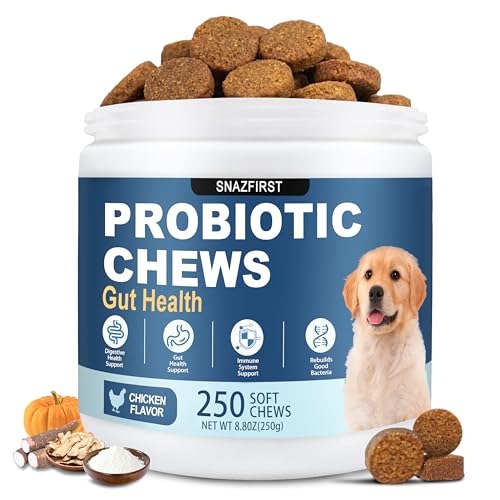
SnazFirst offers a dog probiotic chew formulated with five probiotic strains, designed to support gut flora and ease digestive discomfort. The product emphasizes immune system support and skin-friendly outcomes by reducing gut-derived issues that can contribute to itching or irritation. With inulin and pumpkin as natural supporting ingredients, these chews aim to provide a tasty option for daily gut health while addressing common canine digestive concerns. The blend seeks to balance regularity and overall wellness without artificial additives in the listed formulation.
ZEBORA Probiotics for Dogs — Digestive Health

ZEBORA combines a balanced blend of probiotics with prebiotics, fibers, and digestive enzymes in its 120-chew package. The formula targets a healthy intestinal environment, supporting immune resilience and long-term gut balance. It also emphasizes reducing common canine digestive issues such as gas and loose stools, while aiming to support skin and coat health through improved gut function. The product stresses a natural, kitchen-shelf friendly approach without artificial additives, making it suitable for daily administration.
Nutri-Vet Pre & Probiotics for Dogs

Nutri-Vet’s probiotic chews are designed to support digestive health across breeds and sizes, featuring both prebiotics and probiotics. The formulation focuses on promoting proper stool quality, boosting the immune system, and supporting gut health for overall wellness. The texture and flavor are described as enjoyable for many dogs, helping with daily administration. This option is often chosen for its balanced approach to ongoing gut health and immune support, rather than a short-term digestive upset solution.
WONTECHMI Probiotics for Dogs

WONTECHMI emphasizes gut health with a formulation that includes probiotics, digestive enzymes, and prebiotics, plus components aimed at reducing itchy skin and improving overall wellness. Marketed as USA-made, the product highlights premium ingredients and the avoidance of artificial colors or flavorings. The chews are positioned to support digestion and immune health while addressing dermatological concerns that can be associated with gut imbalance, making it a versatile option for dogs with concurrent skin sensitivities.
Buying Guide: Key Purchase Considerations
- Probiotic strains and potency: Look for products listing specific strains (such as DE111 Bacillus subtilis) and CFU ranges. A diverse blend can support broader gut flora balance, while clinically studied strains may offer more predictable outcomes.
- Prebiotics and enzymes: Some formulas include prebiotics (like inulin) and digestive enzymes to enhance probiotic activity and nutrient absorption. These additions can improve digestibility and stool quality.
- Palatability and texture: Chews should be appealing to dogs while being easy to administer. Flavorings like chicken or pumpkin can help ensure consistent daily use, especially for picky eaters.
- Allergen considerations: Check for artificial colors or flavors, wheat or soy, and other common allergens. Many brands offer grain-free or limited-ingredient options if necessary.
- Your dog’s life stage and health needs: Puppies, adult dogs, and senior dogs may require different potencies. Dogs with diarrhea, allergies, or immune concerns might benefit from specific formulations emphasizing gut balance and immune support.
- Consumption guidance: Consider whether the product is a daily chew or intended for intermittent use during digestive distress. Follow the manufacturer’s dosing instructions for your dog’s weight.
- Quality and safety: Choose products manufactured in reputable facilities with transparent ingredient lists. Look for third-party testing or veterinary recommendations when possible.
- Long-term expectations: Probiotics work gradually. Decide on a trial period (e.g., 4–8 weeks) to assess changes in digestion, stool quality, and skin or coat health before continuing long-term.
- Integration with other supplements: If your dog is on antibiotics, probiotics can be timed to support gut recovery. Consult with a veterinarian to coordinate supplementation appropriately.
When selecting a dog probiotic chew, consider your pet’s specific digestive symptoms, skin sensitivities, and immune health goals. The five products above offer a range of probiotic blends, supporting ingredients, and flavor profiles to suit different dogs and owners. Always monitor your dog for any adverse reactions and consult with a veterinarian if symptoms persist or worsen.