The best dog skin disease treatment depends on the cause: a topical spray may help soothe irritated skin, while a veterinarian may need to diagnose infection, parasites, or allergies. Veterinary Formula Clinical Care Antiseptic & Antifungal Spray is best for general skin and coat support; its Hot Spot & Itch Relief Spray is aimed at itchy hot spots. Hydrocortisone lotion targets localized irritation, omega-3 chews offer daily skin support, and Sulfodene ointment is intended for minor cuts and scrapes. These products are not substitutes for veterinary diagnosis.
| Product | Best suited for | Form |
|---|---|---|
| Veterinary Formula Antiseptic & Antifungal | General skin and coat support | Spray |
| Veterinary Formula Hot Spot & Itch Relief | Hot spots and itch support | Spray |
| Chew + Heal Hydrocortisone | Localized irritation and itching | Lotion |
| OurCares Omega 3 | Daily skin and coat support | Soft chews |
| Sulfodene Wound Care | Minor cuts and scrapes | Ointment |
Veterinary Formula Antiseptic & Antifungal Spray

This 8-fluid-ounce spray is designed to soothe skin described as red, scaly, greasy, or smelly while adding moisture. The product is paraben-free and described as non-irritating for cats and dogs. Its listed use is between washes alongside the brand’s Antiseptic & Antifungal Shampoo.
Best for: Owners seeking a topical product for general skin and coat support between baths. It is a relevant choice because its stated purpose includes skin concerns associated with environmental stressors. Limitation: The product description does not establish that it cures a fungal or bacterial infection. Ask a veterinarian about persistent odor, scaling, or redness.
Veterinary Formula Hot Spot & Itch Relief Spray

This dog and cat spray is intended to support skin affected by hot spots commonly associated with allergies, insect bites, or a dirty, matted, or wet coat. The description says its ingredients calm and moisturize skin; wheat germ oil adds moisture. It is dye-free and paraben-free and can be used between washes with the matching shampoo.
Best for: Dogs with localized itch or hot-spot concerns when a topical, between-bath option is desired. Limitation: Hot spots can worsen quickly, and the spray does not identify or treat the underlying cause. Seek veterinary advice for open, spreading, painful, or recurring lesions.
Chew +amp; Heal Hydrocortisone Lotion

This 4-fluid-ounce lotion contains hydrocortisone and is described as helping with inflammation, moist eczema, bug bites, and small rashes. The product information says it can reduce itching and swelling and may help discourage excessive scratching.
Best for: Owners considering a localized anti-itch lotion for a small irritated area. It was selected because its stated use is different from general moisturizing sprays and daily supplements. Limitation: The supplied information does not specify application frequency or restrictions for particular conditions. Ask a veterinarian before using hydrocortisone, especially on broken skin, near the eyes, or when the diagnosis is uncertain.
OurCares Omega 3 Fish Oil Soft Chews

These soft chews are described as providing 180 mg EPA and 120 mg DHA per chew from wild-caught fish oil. The listing presents them as daily skin and coat support for concerns such as itching, shedding, and seasonal or environmental allergies. The chicken-flavored chew format avoids measuring liquid oil.
Best for: Owners looking for an oral supplement as part of ongoing skin and coat care. The listed directions say one to two chews daily based on the dog’s weight. Limitation: A supplement is not a treatment for an active infection or severe skin disease. Confirm suitability and dosing with a veterinarian, particularly if your dog has health conditions or takes medication.
Sulfodene Wound Care 3-Way Ointment
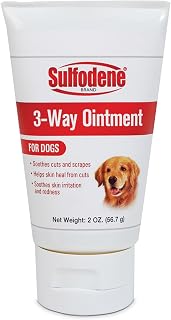
This 2-ounce ointment is described as first aid for minor cuts, scrapes, bites, abrasions, redness, and skin irritation. Its listed features include an antiseptic skin-care purpose and a barrier intended to help keep germs out while supporting the skin’s natural recovery.
Best for: Minor surface wounds where a squeeze-tube ointment is more suitable than a spray or supplement. Limitation: It is presented as wound care, not as a general remedy for chronic itching, allergies, or widespread rash. Deep wounds, significant swelling, discharge, or worsening redness need veterinary attention.
Buying Guide: Choosing Dog Skin Disease Treatment
What kind of skin problem does your dog have?
Match the product type to the concern, but do not assume that appearance reveals the cause. A spray may be convenient for coat-level skin support; lotion is intended for targeted application; ointment is listed for minor wounds; and a chew is a supplement for ongoing support. Bacterial or fungal infections, parasites, allergies, and other conditions can look similar and may need different veterinary care.
When should you contact a veterinarian?
Arrange veterinary advice if symptoms persist, recur, spread, or cause significant discomfort. Get prompt help for open or oozing sores, marked swelling, pain, a strong odor, or a dog that seems unwell. A veterinarian can assess the cause and recommend an appropriate treatment rather than relying on symptom relief alone.
How should you compare product formats?
- Sprays: Consider these for between-bath topical support when the affected area can be reached easily.
- Lotion: Consider targeted use for a small area, while following product directions and veterinary guidance.
- Ointment: The listed use is minor cuts and scrapes, rather than broad skin or allergy management.
- Soft chews: These offer oral supplement support, but should not replace treatment for an active skin condition.
What should you check before applying a topical product?
Read the label for directions and intended use. Ask a veterinarian whether the product is appropriate for your dog’s specific symptoms, especially if skin is broken or the area is near the eyes or mouth. Prevent licking when the product label or veterinarian advises it, and stop use and seek guidance if irritation worsens.
Frequently Asked Questions
Can an over-the-counter spray cure a dog’s skin infection?
Do not assume that it can. These product descriptions indicate skin-care or symptom-support uses, but they do not establish that a spray cures an infection. A veterinarian can diagnose the cause and recommend treatment.
Which option is intended for hot spots?
Veterinary Formula Clinical Care Hot Spot & Itch Relief Spray is specifically described for hot spots and itching. Persistent, open, or worsening hot spots should be assessed by a veterinarian.
Is hydrocortisone lotion appropriate for every itchy rash?
No. The lotion is described for irritation and itching, but not every rash has the same cause. Ask a veterinarian before use when the cause is unknown or the skin is broken.
Are omega-3 chews a substitute for veterinary treatment?
No. They are presented as daily skin and coat support, not as a substitute for diagnosing or treating active disease.
When is wound ointment the more relevant choice?
Sulfodene is described for minor cuts, scrapes, bites, and abrasions. Deep, painful, infected-looking, or worsening wounds need veterinary care.