Choosing the right drainage layer is essential for healthy terrariums, bioactive setups, and palm tanks. The following products offer varied approaches—from expanded clay pebbles to barrier meshes—that improve drainage, aeration, and moisture management. This guide presents five top picks with clear usage notes to help you compare effectiveness across setups like tropical bioactive terrariums, frog habitats, and planted terrariums.
| Product | Brand | Key Benefit |
|---|---|---|
| Riare 2LBS Expanded Clay Balls | Riare | Excellent drainage and moisture retention; pH neutral |
| Terrarium Substrate Barrier | Finn’s Frog Farm | Forms a barrier to protect the false bottom while allowing water flow |
| The Bio Dude HydroGrow Drainage Layer | BIODUDE | Promotes aeration from top to bottom; natural material |
| Josh’s Frogs Drainage Layer (5 Quart) | Josh’s Frogs | First layer under substrate barrier; prevents soggy roots |
| Legigo Organic Leca Clay Pebbles | Legigo | Lightweight, natural drainage and aeration for roots |
Riare Expanded Clay Balls for Terrariums

Riare’s 2-pound bag delivers 4–16 mm LECA clay balls designed for reptile substrates, ponds, and bioactive terrariums. The clay pebbles are natural, pH-neutral, and baked to form porous, lightweight pellets. They support drainage, moisture retention, and root growth without introducing dirt or debris. The packaging is resealable for longevity, and the material can be repurposed in gardens after use. This option suits terrariums requiring a robust drainage layer that also supports plant roots in bioactive setups.
Terrarium Substrate Barrier

This barrier from Finn’s Frog Farm blocks substrate and most bioactive organisms from reaching the false bottom while allowing water to pass through. It creates a protective layer between the drainage zone and ABG (Live Substrate) mixes, enabling better filtration and reducing maintenance. It’s especially useful in frog, snake, or lizard habitats where a stable drainage layer supports long-term terrarium hygiene and moisture control.
The Bio Dude HydroGrow Drainage Layer
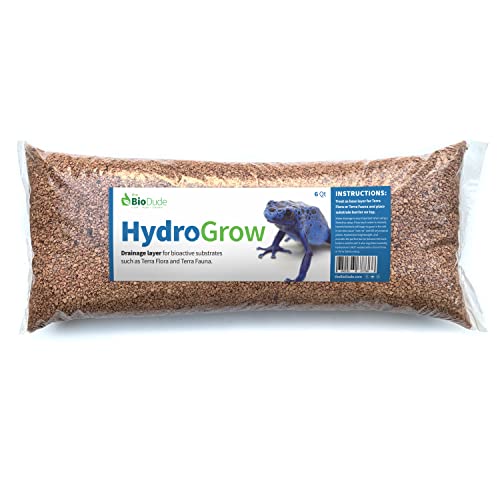
The HydroGrow Drainage Layer from BIODUDE is designed to aerate from top to bottom, promoting efficient drainage through 100% natural LECA (expanded clay) pebbles. It supports even top surfaces without a divider and helps maintain a balanced moisture profile critical for tropical bioactive terrariums. This option emphasizes natural materials and consistent water movement to prevent anaerobic zones in the substrate.
Josh’s Frogs Drainage Layer

Josh’s Frogs Drainage Layer is used as the first layer under the substrate barrier, specifically when planting terrariums. It prevents soggy roots by removing standing water from the soil, discouraging anaerobic conditions that cause poor soil quality and odors. It’s a practical option for setups that require reliable moisture management and stable root health in planted or bioactive environments.
Legigo Organic Leca Clay Pebbles

Legigo’s 2 lb bag offers 4–16 mm natural Leca clay pebbles, ideal as a lightweight drainage layer in terrariums, hydroponics, and orchid setups. The pH-neutral, odor-free pebbles promote excellent drainage and aeration while maintaining root health. The resealable pouch aids long-term storage and keeps the material ready for ongoing terrarium projects or future reconfigurations.
Buying Guide
- Drainage vs. aeration balance: Clay pebble layers excel at both drainage and providing air to roots, but some setups may benefit from a barrier mesh or substrate barrier to prevent soil intrusion into the drainage layer.
- Material stability and maintenance: Natural LECA and clay pebbles are durable and reusable, while some barriers reduce substrate mixing but may need replacement if damaged.
- Terrarium type and inhabitants: Bioactive frog habitats and planted terrariums often require ongoing moisture management, whereas reptile tanks may prioritize rapid water drainage to avoid stagnation.
- Layer ordering: In many designs, the drainage layer sits beneath a barrier or substrate cap. Some products advertise “no divider” designs but may still benefit from an extra layer for filtration.
- Size and adaptability: Look for 4–16 mm particles for versatility across pot sizes. Mesh or barrier components should be cut or shaped to fit irregular containers.
When selecting a drainage solution, consider the terrarium’s eco-system goals, whether you prioritize rapid drainage, stable moisture, or barrier protection for the drainage layer. In multi-species or bioactive setups, combining a drainage layer with a barrier and careful substrate choice can optimize filtration, reduce odors, and support healthy plant and animal life.