The best flea and tick defense depends on your pet, the product’s labeled use, and whether you need an oral chew or a spray. These five options include cat-specific chews, dog chews, and a dog spray. Guardian’s Choice offers straightforward chicken-flavored chews, Cudory adds coat-support claims for cats, and Natural Care is the spray option. Product descriptions alone do not establish how well a product works or whether it is suitable for a specific pet, so check the full label and consult a veterinarian before starting a treatment.
| Product | Format | Best suited for |
|---|---|---|
| Guardian’s Choice Flea Chews for Cats | Chews | Cat owners seeking a chicken-flavored option |
| Guardian’s Choice Flea Chews for Dogs | Chews | Dog owners who prefer an easy-to-administer chew |
| Natural Care Flea & Tick Spray | Spray | Dog owners looking for a topical application |
| Cudory Flea and Tick Prevention for Cats | Chews | Cat owners interested in added coat-support claims |
| Petsology Oral Defense | Soft chews | Dog owners who prefer a chew over sprays or collars |
Guardian’s Choice Flea Chews for Cats

These 100-count cat chews are best for owners who want a flavored supplement-style product rather than a spray. The listed features highlight savory chicken flavor and the absence of artificial colors, flavors, and preservatives. The brand also says the chews are made in the United States using domestic and imported ingredients.
Why it was selected: It is specifically labeled for cats and provides a chew format for households that prefer oral products. Check the package for directions and product claims before use; the supplied description does not state active ingredients, dosage, or a treatment schedule. Do not assume it is interchangeable with a veterinary flea or tick medication.
Guardian’s Choice Flea Chews for Dogs

This 100-count dog chew is best for owners seeking an easy-to-administer, chicken-flavored format. The listed formulation includes B vitamins such as thiamine, niacin, pyridoxine, folate, and vitamin B12. The description says the chews do not contain artificial colors, flavors, or preservatives.
Why it was selected: It is a dog-specific option with a clearly described flavor and ingredient features. The product description does not provide active pest-control ingredients or dosing details, so review the full label to understand the intended use. Choose another format if your dog will not take chews or needs a veterinarian-directed treatment.
Natural Care Flea & Tick Spray

This 14-ounce spray is best for dog owners who prefer an applied product instead of an oral chew. Its description says it uses steam-distilled essential oils and is intended to kill fleas, flea eggs, and ticks by contact. The brand describes it as suitable for routine prevention or an active infestation.
Why it was selected: It gives buyers a different application format from the chew options. The product is identified for dogs, so do not apply it to cats unless its label explicitly permits that use. Follow the label’s application instructions and precautions; “natural” ingredients do not guarantee that a product is risk-free for every animal or household.
Cudory Flea and Tick Prevention for Cats
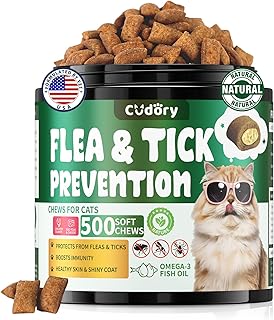
Cudory’s 500-count cat chew is best for cat owners who want a product description that also mentions skin hydration and coat shine. Listed ingredients include B-complex vitamins and brewer’s yeast. The manufacturer describes it as suitable for cats of all breeds and ages and recommends daily use.
Why it was selected: It is specifically presented for cats and combines pest-defense claims with coat-support claims. The large count may appeal to buyers comparing package quantity, but quantity alone does not indicate suitability or value. Check the label for serving size, age guidance, and ingredient details, and ask a veterinarian whether daily use is appropriate for your cat.
Petsology Oral Defense Soft Chews

Petsology’s 170 soft chewables are best for dog owners who prefer an oral format to sprays or collars. The product description calls the formula natural and says it is made with selected ingredients without harsh chemicals. It also describes the chews as tasty and intended to provide lasting defense.
Why it was selected: It offers another dog-specific chew option with a different package count. The supplied details do not identify the ingredients, active compounds, dosage, or duration of protection. Review the complete label before purchase, and avoid relying on broad protection claims without confirming the product’s intended use with your veterinarian.
Buying Guide: How to Choose Flea and Tick Defense
Is the product labeled for your pet?
Start with species. A product listed for dogs should not be used on a cat unless its label specifically says it is suitable for cats. Cats and dogs can respond differently to ingredients. Confirm the intended species, age guidance, weight directions, and warnings on the package rather than inferring suitability from a product title or general description.
Do you want a chew or a spray?
Chews may suit pets that readily take treats and owners who prefer an oral format. Sprays may suit owners who want a product applied to the coat or another label-specified area. Application method alone does not determine effectiveness. Follow the full label, including how often to use the product and any precautions around people or other animals.
What does the ingredient list tell you?
Compare the complete ingredients and the product’s stated purpose. The supplied descriptions for several chews do not give active pest-control ingredients or detailed dosing information. B vitamins, brewer’s yeast, or essential oils in a description do not by themselves establish the level or duration of flea and tick protection. Ask a veterinarian to help assess products alongside your pet’s health and existing medications.
When should you ask a veterinarian?
Get veterinary guidance if your pet is very young, pregnant, nursing, ill, taking medication, or already showing signs of an infestation. A veterinarian can recommend an appropriate prevention plan and explain when a product’s label claims are sufficient for your situation. Seek advice before combining products, since overlapping treatments may create unwanted exposure.
Frequently Asked Questions
Can I use a dog flea product on my cat?
No—not unless the product label explicitly lists cats as an intended species. Use only products labeled for your pet, and ask a veterinarian if you are unsure.
Are chews or sprays better for flea and tick defense?
Neither format is automatically better for every pet. Compare the label, ingredients, application instructions, and your pet’s ability to take or tolerate the product.
Do “natural” ingredients mean a product is risk-free?
No. Natural ingredients can still cause problems for some pets. Follow label precautions and consult a veterinarian, especially before using a product around cats or other household animals.
Can these products replace veterinarian-recommended prevention?
Do not assume they can. Check each product’s full label and ask your veterinarian whether it provides the protection your pet needs.