Puppy milk replacers provide vital nutrition when a dam is unavailable, or when a puppy is orphaned, rejected, or weaning. The right formula supports growth, digestion, and immune health during the critical early weeks. Below is a curated guide to five widely used puppy milk replacers, highlighting how each product supports growth, digestion, and energy needs. A compact comparison table follows to help you quickly assess options.
| Product | Key Benefit | Form |
|---|---|---|
| PetLac Powder for Puppies | Complete nutrition for newborn to six weeks; easy to digest with prebiotics | Powder |
| Hartz Powdered Puppy Milk Replacer | Mimics mother’s milk; quick-mix powder with bone and coat-supporting nutrients | Powder |
| Pet-Ag Goat’s Milk Esbilac Liquid | Whole goat milk base; strong digestion support for sensitive pups | Liquid |
| PetAg Esbilac Puppy Milk Replacer Powder | Balanced nutrition with prebiotics and probiotics for gut health | Powder |
| Nutri-Vet Milk Replacer For Puppies | Opti-Gut probiotics; supports digestion and healthy growth | Powder |
Choosing the right option depends on a puppy’s age, digestion sensitivities, and whether you prefer powder or liquid formats. The products below are evaluated for palatability, digestibility, and nutritional completeness to help you identify a suitable milk replacer for different scenarios.
PetLac Powder For Puppies

PetLac is designed as a complete puppy milk replacement, suitable from birth to six weeks. It provides balanced nutrition to support growth and development and is formulated to be easy on the stomach. The product includes a blend of vitamins, minerals, and amino acids to complement early-life nutrition. Its high palatability and digestive-friendly profile make it a common choice for orphaned or weaning puppies in need of reliable caloric intake and gut support.
Hartz Powdered Puppy Milk Replacer
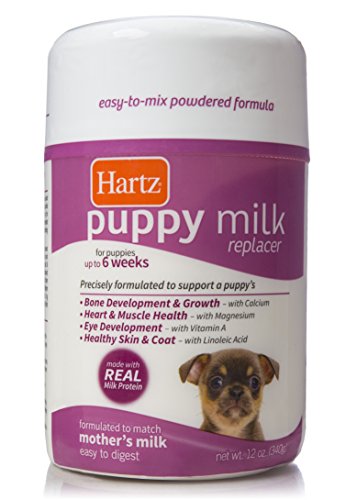
Hartz Powdered Puppy Milk Replacer is formulated to resemble a mother dog’s milk. It blends quickly with room temperature water for on-demand feeding and is designed to support bone development and healthy skin and coat. The formula includes calcium for strong bones, magnesium for cardiac and muscle function, vitamin A for eye health, and linoleic acid for a healthy coat. This option is suitable for quick preparation and reliable caloric intake during early life stages.
Pet-Ag Goat’s Milk Esbilac Liquid

Goat’s Milk Esbilac Liquid offers a ready-to-feed option based on whole goat milk protein, designed for puppies with sensitive digestive systems. It provides essential nutrients similar to mother’s milk and includes a fiber blend to promote comfortable digestion and gut health. This liquid formula is convenient for caregivers seeking a quick, nutritionally complete option that supports growth in newborns through six weeks.
PetAg Esbilac Puppy Milk Replacer Liquid

Esbilac Liquid is marketed as a ready-to-feed option that closely mirrors mother’s milk in nutrient balance. It is designed for puppies from birth to six weeks, emphasizing digestibility with a fiber blend to support gut health. The product aims to provide complete nutrition with vitamins, minerals, and trace nutrients, helping with energy levels and steady growth when a dam cannot nurse.
PetAg Esbilac Puppy Milk Replacer Powder

Esbilac Puppy Milk Replacer Powder combines prebiotics, probiotics, and vitamins to support digestion, immunity, and overall development for newborn puppies. This powder aims to be a close approximation to natural mother’s milk in protein, fat, and carbohydrate content, while providing essential micronutrients. It’s a practical option for caregivers who prefer a powdered form and value gut health support through added probiotics.
Nutri-Vet Milk Replacer For Puppies

Nutri-Vet Milk Replacer focuses on delivering complete puppy nutrition with a probiotic component (Opti-Gut) to support digestion and nutrient absorption. The formula is designed to be used in newborn feeding and as part of whelping supplies. This option highlights a balance of protein, fat, and carbohydrates to promote healthy growth, along with supportive gut health through probiotics and micronutrients.
Buying Guide: Key Considerations For Choosing A Puppy Milk Replacer
- Age suitability: Most substitutes are formulated for newborns up to six weeks. Some liquids may be used slightly beyond this window, but always follow product directions and veterinarian guidance for weaning and transition to solid food.
- Digestive compatibility: Puppies with sensitive stomachs may benefit from formulas that include prebiotics and probiotics to improve gut health and nutrient absorption. Fiber blends in liquids can also aid digestion.
- Nutritional balance: A good milk replacer should provide essential protein, fats, carbohydrates, vitamins, and minerals comparable to mother’s milk. Look for close alignment to canine amino acid profiles and energy needs.
- Form: Powdered formulas require preparation with water and careful mixing to avoid clumps. Ready-to-feed liquids save time but may cost more and require refrigeration after opening.
- Palatability and acceptance: Some puppies are picky. Highly palatable formulas with gentle flavors support consistent feeding and weight gain.
- Digestive health support: Probiotics and prebiotics are beneficial for gut health and immune function, especially in orphaned or stressed puppies.
- Storage and shelf life: Powdered formulas typically have longer shelf life and can be stored dry; liquids require proper refrigeration and careful handling.
- Veterinary recommendations: For puppies with known health concerns, screen options with a veterinarian to ensure suitability for sensitive digestive systems or special nutritional needs.
Across the selected options, the products provide strong baseline nutrition, digestion support, and flexibility in preparation. When selecting a milk replacer, consider your puppy’s age, digestive tolerance, and how you plan to feed (dry powder mixed with water versus ready-to-use liquids). It is also important to maintain proper feeding schedules and monitor growth progress to ensure healthy development during the critical early weeks.