Choosing natural wood perches helps budgies and other small birds exercise their feet, satisfy chewing instincts, and enrich their cage environment. The following five products offer untreated woods, varied textures, and multiple shapes to support climbing, gripping, and beak conditioning. Each option prioritizes safety and natural materials while delivering different perch configurations to fit cages of various sizes.
| Product | Brand | Key Benefit | Included Perches |
|---|---|---|---|
| CZWESTC 5PCS Natural Wood Bird Perch Set | CZWESTC | Natural, untreated wood; forest gym variety | 2 straight, 3 forked |
| CZWESTC 8 PCS Natural Bird Perch Set | CZWESTC | Apple wood platforms and varied branches | 2 round platforms, 3 straight, 3 forked |
| CZWESTC 8PCS Natural Grape Wood Perch Set | CZWESTC | Grapevine and natural wood mix; diverse textures | Forked grapevine, straight perch, bark-texture sticks, platforms |
| LIMIO 6-Piece Bird Perch Set | LIMIO | Four types for varied gripping | Grape sticks, parakeet perches, round/square platforms |
| Sienle 5Pcs Natural Wooden Bird Perch Set | Sienle | Mixed natural woods; safe, paint-free | Multiple wood types and textures |
CZWESTC 5PCS Natural Wood Perch Set

The set includes two straight branches (6″ long, 0.6″-1″ thick) and three forked branches (6″ long, 0.4″-0.6″ thick). Made from natural, untreated wood to satisfy chewing instincts and support beak conditioning. Especially suitable for small to medium birds such as parakeets, budgies, cockatiels, and conures. The varied diameters create a naturalistic “forest gym” for climbing and gripping, while remaining cage-friendly in size.
CZWESTC 8 PCS Natural Bird Perch Set

This 8-piece collection blends apple wood platforms with straight perches and forked branches. The natural, untreated wood provides safe chewing surfaces and varied textures to help birds exercise feet and claws. Platforms and perches are sized for small to medium species, including budgies and parakeets, supporting diverse perched positions and enrichment within the cage.
CZWESTC 8PCS Natural Grape Wood Perch Set
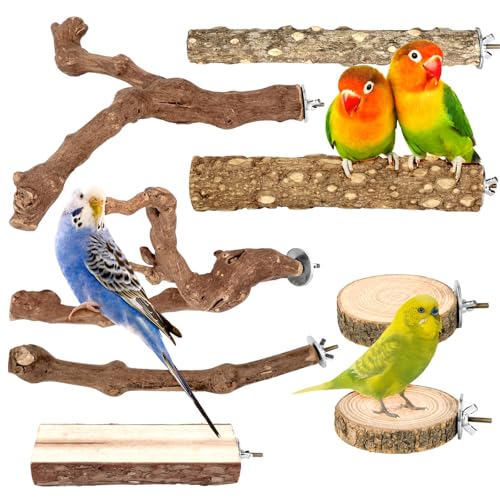
This diverse 8-piece set features grapevine forked branches, a straight grapewood perch, prickly ash sticks, a rectangular platform, and round bases. Made from 100% natural grapewood and prickly ash, it provides varied textures for chewing and gripping. The assortment is designed to fit small birds like budgies, cockatiels, and conures, encouraging climbing and natural behaviors within the cage.
Sienle 5Pcs Natural Wooden Bird Perch Set

Designed with bird health in mind, this multi-wood set includes apple wood, prickly ash, and grapevine variants. Free from paint and dyes, the perches are safe, durable, and provide a natural habitat experience. They fit small to medium birds such as parakeets, budgies, lovebirds, and cockatiels, offering chew-worthy textures and a variety of gripping surfaces to promote foot health and activity.
Buying Guide: What To Look For In Natural Wood Perches
Key purchase considerations help ensure safety, durability, and enrichment for your budgie. First, materials should be untreated and free from paints, dyes, or toxic finishes. Natural woods like apple, grapewood, prickly ash, elm, or chestnut offer varied textures that encourage chewing and gripping. Second, consider a mix of perch shapes and sizes to accommodate different foot sizes and climbing preferences, including straight, forked, round, and platform varieties. Third, check for secure mounting hardware; built-in bolts and wing nuts allow tool-free installation and stability. Fourth, ensure the perches don’t clutter the cage; balance is essential for safe movement and access to toys. Finally, randomize placements over time to maintain mental stimulation and exercise.
Depth and diversity of textures can help prevent foot problems like splaying or overgrowth. For budgies, aim for perches in the 0.4″ to 1″ diameter range, with several 5″ to 7″ lengths, plus a couple of slightly larger or broader platforms to offer resting spots. For enrichment, combine chewing surfaces with climbing opportunities—forked branches, bark textures, and irregular shapes mimic a natural environment. Always supervise new perches initially to observe how your bird interacts with the textures and heights, and rotate sets to sustain interest over time.
Compared to synthetic or painted options, natural wood perches tend to wear down over time, which is normal. Regular inspection is important: look for cracks, loose bolts, or splinters, and replace any damaged pieces promptly. If your bird shows signs of chewing through a perch too quickly, consider alternating with thicker branches or different woods to balance wear and safety. Environmental factors, like humidity and cage size, can also influence how perches wear and how birds interact with them.