A heated water bowl is the most suitable choice when you need to keep outdoor pet water from freezing in winter. The 3.2-liter heated bowls are best for larger or shared watering needs, while the NAMSAN bowl offers a smaller 2.2-liter capacity. The stainless steel floating-disk bowl is not heated, so it is better for controlling splashes indoors—not for preventing ice.
| Product | Best For | Capacity |
|---|---|---|
| 3.2L Heated Water Bowl | Outdoor animals in freezing weather | 3.2 L |
| Yeatruojeet Heated Water Bowl | Large capacity without an indicator light | 3.2 L |
| NAMSAN Heated Pet Bowl | Smaller capacity and a chew-resistant cord | 2.2 L |
| Fuliuna Large Heated Water Bowl | Large capacity and an extra-long cord | 108 oz |
| Puppalace Stainless Steel Bowl | Reducing splashes when freezing is not a concern | 108 oz |
3.2L Heated Water Bowl for Outdoor Animals

This heated bowl is best for households or outdoor spaces that need a substantial water supply through freezing weather. Its 3.2-liter capacity serves dogs, cats, rabbits, chickens, ducks, and other animals. The listing says its thermostat stops heating at 131°F and restarts as water cools; it is intended to help keep water from freezing in temperatures down to -4°F.
The BPA-free polypropylene bowl has an anti-chew cord, and the listing recommends placing it in a sheltered location. Choose this model if you need a larger heated bowl for multiple types of animals. Do not immerse it in water, and unplug it when empty; the listing also cautions that wind can damage it.
Yeatruojeet Heated Water Bowl

This 30-watt, 3.2-liter bowl is best for buyers who want a large heated water supply and a low-profile design without an indicator light. The product information describes automatic heating that stops at 131°F and resumes as the water cools. It is listed for dogs, cats, chickens, ducks, rabbits, and squirrels, with use in outdoor settings.
The no-indicator design may suit small or cautious animals, and the lack of an on/off switch is intended to prevent accidental operation by animals. Select it if you prefer a simple bowl without a visible light or switch. The listing does not describe an anti-chew cord, so consider cord placement and supervision when setting it up.
NAMSAN Heated Pet Bowl
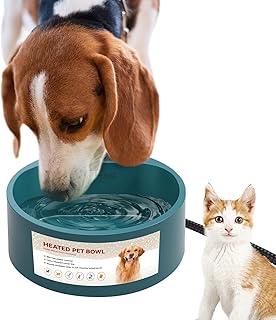
The NAMSAN bowl is best for buyers who need a heated option with a somewhat smaller capacity. It holds 2.2 liters and is made from BPA-free ABS plastic. The listing says the heater maintains water at or below 77°F and can help prevent freezing in extreme cold. Its stated uses include yards, coops, farms, and indoor spaces.
A 5.5-foot steel-wrapped, chew-resistant power line is a useful feature for outdoor placement near animals. Choose this model if 2.2 liters is sufficient and cord protection matters. The smaller capacity may require more frequent refills than the 3.2-liter options; the listing advises checking the water regularly.
Fuliuna Large Heated Water Bowl

This 108-ounce heated bowl is best for buyers prioritizing capacity and cord reach. It has a built-in 30-watt heater, BPA-free polypropylene construction, and an anti-chew power cord. The listing says the heater keeps water between 50°F and 122°F and is designed to provide drinkable water during winter.
The 78.74-inch cord can make placement more convenient when the outlet is not immediately beside the bowl. Choose it for outdoor animals that need a large supply, including cats, rabbits, chickens, ducks, and squirrels. The listing does not specify a minimum outdoor temperature at which the bowl prevents freezing, so avoid assuming performance in every extreme-weather condition.
Puppalace Stainless Steel Floating-Disk Bowl
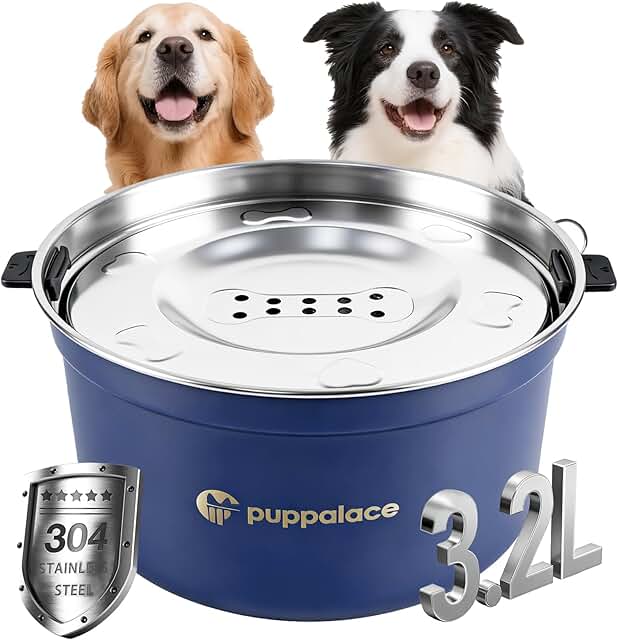
This bowl is best for indoor messy drinkers, not for keeping water from freezing. Its 108-ounce capacity is designed for medium and large dogs or multiple pets, and its floating disk helps control the exposed water surface to reduce splashes and drips. The stainless steel bowl is described as suitable for routine cleaning.
Choose it when spill control and a large capacity matter more than winter heating. Because the listed features do not include a heater, it will not keep outdoor water from freezing. Avoid this option as the sole water source in freezing conditions.
Buying Guide: How To Choose A Non-Freezing Water Bowl
Does the bowl need a heater?
For below-freezing conditions, choose a heated model. A regular bowl, including the stainless steel floating-disk option above, does not prevent ice. Check the product’s stated temperature information and follow its setup and care instructions.
How much capacity do you need?
Capacity affects how often you need to refill the bowl, but it does not guarantee that water will stay available. The listed heated options range from 2.2 liters to about 3.2 liters. Consider the number and size of animals, then check water levels regularly.
Where will you place it?
Place an outdoor heated bowl near a suitable power source and in a sheltered area when the product instructions recommend it. Keep cords positioned to reduce chewing or damage, and follow any guidance about empty bowls, immersion, and outdoor exposure.
Which cord and material details matter?
Some models specify anti-chew or steel-wrapped cords; others do not list that feature. Compare the stated cord length with your intended setup. If material is important, check the listing: the heated options here specify BPA-free plastic, while the Puppalace bowl is stainless steel.
Frequently Asked Questions
What type of bowl keeps outdoor water from freezing?
A heated water bowl is designed to warm water and help prevent freezing. A standard bowl without a heater cannot do this.
Can a heated water bowl be used for animals besides dogs?
The listed heated bowls identify uses for animals such as cats, rabbits, chickens, ducks, or squirrels, depending on the model. Check each product’s stated intended uses.
Should a heated bowl stay plugged in when empty?
Follow the product instructions. The first 3.2-liter bowl’s listing specifically says to unplug it when there is no water in the bowl.
Is a larger bowl always better for winter?
No. A larger capacity can reduce refill frequency, but it does not replace checking water or confirming that the heater suits the expected conditions.