Choosing the right pasture grass for cattle supports steady weight gain, smooth digestion, and season-long grazing. This guide highlights high-yield, resilient seed mixes from trusted brands that perform across common American climates. Each product is evaluated for persistence, palatability, and adaptability to farm conditions, helping landowners optimize forage quality without special equipment or constant reseeding.
Summary of selected products
- Mountain View Seeds 100372 Cattle Pasture Mix Grass Seed, 25-Pound — MOUNTAIN VIEW SEED
- Barenbrug SeedPasture25 Grass Seed — Barenbrug
- Outsidepride Climax Timothy Pasture Grass Seed — Outsidepride
- Outsidepride Forage Tall Fescue Grass Seeds — Outsidepride
- Hancock Seed Co. Cattle Pasture Grass Seed Mix — Hancock Seed Company
Mountain View Seeds 100372 Cattle Pasture Mix

The Mountain View Seeds 100372 Cattle Pasture Mix combines Teton Tall Fescue, Orchardgrass, Tetramag Intermediate Ryegrass, Italian Annual Ryegrass, White Clover, Medium Red Clover, and Timothy. This diverse blend emphasizes excellent persistence and superior yields, supporting steady forage through multiple seasons. The mix adapts well to pastures requiring robust establishment and resilient regrowth after grazing, making it suitable for mixed-species pastures and rotational grazing systems.
Barenbrug SeedPasture25 Grass Seed

Barenbrug SeedPasture25 is designed for rapid establishment and dependable recovery, even under less-than-ideal conditions. The blend is suitable for diverse livestock, including cattle, horses, and small ruminants. Endophyte-free seed enhances palatability and digestibility, while its climate versatility makes it a practical choice for northern regions and transition zones. This option emphasizes quick growth and resilience, helping maintain pasture cover during seasonal shifts.
Outsidepride Climax Timothy Pasture Seed

Outsidepride Climax Timothy Pasture Seed offers a winter-hardy perennial option ideal for cool-season grazing. It thrives in USDA Zones 3-7 and is well-suited for overseeding, hay production, and field curing. Timothy provides high-fiber, nutritious forage that supports livestock digestion and weight management. The late-maturing cycle aids efficient drying for hay, making it a strong candidate for farms focusing on stored forage as part of year-round grazing strategies.
Outsidepride Forage Tall Fescue Grass Seeds
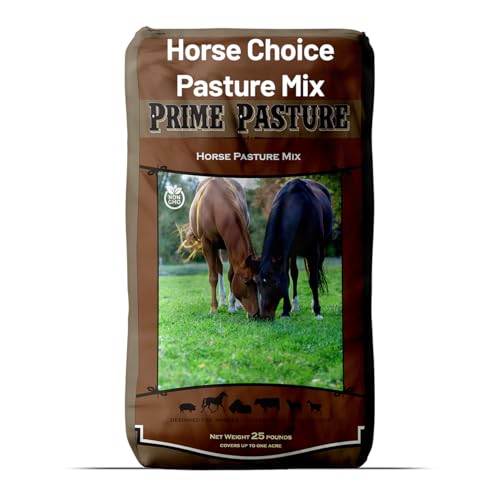
This tall fescue mix is perennial, drought-tolerant, and easy to grow, delivering high-yield, nutrient-dense forage. It supports long-term pasture productivity across varied climates due to deep roots and resilience. The seed stands up well to grazing pressure and provides dense cover for hay production and silage. It is particularly suitable for stockpiling forage for fall and early winter grazing, helping extend grazing seasons for cattle operations.
Hancock Seed Co. Cattle Pasture Grass Seed Mix

Hancock Seed Co.’s Cattle Pasture Grass Seed Mix is a drought-tolerant option designed for warm-climate pastures. It supports establishment across a variety of soil conditions and is recommended for spring and summer planting. The mix emphasizes resilience and adaptability, helping maintain forage supply through variable weather and ensuring reliable pasture cover for grazing, food plots, and erosion control contexts.
X-Seed Pasture Land Dry-Land Forage Seed Mix
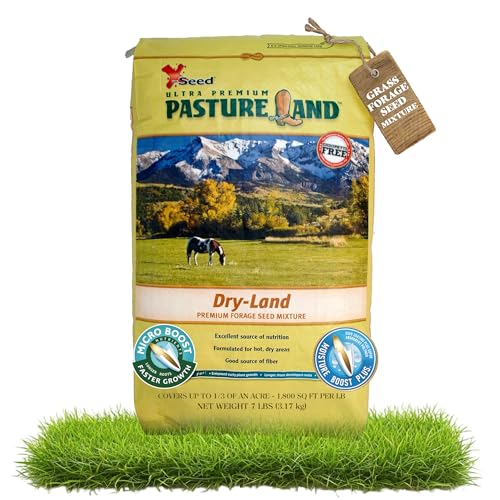
X-Seed’s Dry-Land Forage Seed Mix uses Micro-Boost technology to improve germination and root development, accelerating establishment in hot, dry climates. The blend focuses on tall fescue, orchardgrass, and ryegrass varieties that tolerate arid conditions, enabling safer nutrition for a variety of livestock while maintaining pasture cover in challenging environments.
Outsidepride Forage Tall Fescue Grass Seeds
Note: The following stand-alone Tall Fescue option emphasizes perennial growth, drought tolerance, and high palatability. It is suitable for grazing, hay production, and silage across a broad range of climates, with a focus on durable, long-lived pasture stands that perform well in rotational grazing systems and cover-crop rotations.
Outsidepride Grazer Orchard Pasture Grass Seed

The Grazer Orchard mix blends early, medium, and late-maturing orchard grasses to ensure steady growth and extended forage availability. Suited for temperate climates with drought and shade tolerance, it supports grazing, hay, and silage while delivering robust digestibility and forage quality for cattle and other livestock. The diversity helps stabilize yields across seasons and soil types.
Buying Guide: Key Purchase Considerations and Comparisons
Goal alignment: Identify whether your priority is rapid establishment, long-term perennial productivity, or drought tolerance. Some blends emphasize quick ground cover, while others focus on sustained yields and resilience to weather extremes.
Climate compatibility: Match seed mixes to your USDA zone and typical seasonal temperatures. Winter-hardy Timothy and cool-season fescues excel in northern areas, while drought-tolerant tall fescue and warm-climate mixes suit southern regions.
Grazing plan: Consider how you rotate pastures. Some mixes support rotational grazing with steady regrowth; others are better for stockpiling forage or hay production. Multi-species blends can improve nutrition but may require careful pasture management.
Palatability and digestibility: Endophyte-free seed options generally provide high palatability and digestibility for cattle, reducing the risk of digestive issues and promoting steady intake. If horses or other livestock share pastures, endophyte-free seeds may be preferable.
Establishment and maintenance: Rapid-establishment blends help recover damaged pastures quickly. Perennial mixes reduce reseeding frequency but may take longer to fully establish. Consider soil preparation, fertilization, and grazing pressure when planning planting.
Soil health and cover crop potential: Some mixes enhance soil stability and moisture retention, supporting erosion control and long-term pasture resilience. Oversowing and cover-crop usage can conserve soil quality between grazing cycles.
Availability and accessibility: Availability of specific blends may vary by region. Brand reputation, seed quality, and germination rates are important to ensure consistent performance year after year.
Price-to-value balance: While prices are not listed here, evaluate total cost per acre and expected yield per season. Higher-yield, drought-tolerant blends may offer long-term savings through reduced reseeding and improved forage production.
Field testing: If possible, plant small test plots to assess germination, establishment speed, and animal intake before committing to a full field seeding. Local extension services can provide region-specific guidance.