Slow feeders for wet food help pets eat more mindfully, aid digestion, and reduce the risk of choking or vomiting by elongating mealtime. This guide reviews five top options designed for dogs and cats, highlighting design features, materials, and ease of use. From silicone puzzle bowls to ceramic elevated designs, these feeders emphasize anti-slip bases, chew-safe materials, and engaging textures that encourage slower, healthier eating habits for pets of various sizes.
Summary of chosen products:
| Product | Type | Key Benefit | Materials |
|---|---|---|---|
| Bifeaw Slow Feeder Dog Bowls | Silicone Puzzle Bowl | Extends mealtime, reduces gulping | Food-grade silicone |
| LE TAUCI Ceramic Slow Feeder | Ceramic Puzzle Bowl | Heavier, stable, safe for dogs | Ceramic |
| Outward Hound Fun Feeder Slo Bowl | Small Slow Feeder Bowl | Ideal for small breeds and cats | Durable plastic/ceramic variants |
| MateeyLife Slow Feeder Dog Bowls 2PCS | Puzzle Bowls | Reduces overeating, engaging maze design | Plastic/silicone composite |
| TRUNDISAN Elevated Cat Slow Feeder Bowls | Ceramic Raised Slow Feeder | Whisker-friendly, anti-vomit digestion | Ceramic, metal base |
Bifeaw Slow Feeder Dog Bowls
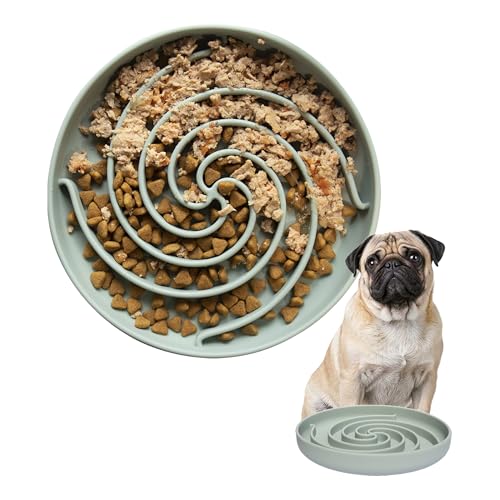
The Bifeaw slow feeder is a 7.5-inch by 1.2-inch silicone bowl designed to hold 1–2 cups of dry, wet, or fresh food. Its puzzle-inspired layout slows feeding to promote digestion and reduce air swallowing, which can lessen bloating and vomiting. The flexible silicone is easy to clean and dishwasher-safe, making it practical for daily use. The design also offers mental stimulation as dogs work through the maze to reach their meal. This feeder is suitable for dogs of various sizes and can double as a lick mat to calm nervous behavior during stressful moments.
LE TAUCI Ceramic Slow Feeder Bowls

These ceramic slow feeder bowls are marketed as a strong alternative to plastic, with a focus on durability and safety. The ceramic construction is heavier and less prone to tipping, which helps prevent splashes and messes during feeding. They are microwave-safe and easy to clean, delivering convenience for reheating meals. The bowl’s simple, stable design makes it a good choice for small to medium dogs or cats who benefit from a structured, engaging eating experience. The recommendation often notes using silicone first-time to acclimate pets to slow feeding.
Outward Hound Fun Feeder Slo Bowl

This small slow feeder is designed for extra-small to small breeds, puppies, and cats requiring slower eating. It holds about 3/4 cup of dry or wet food and features a puzzle-style maze to engage pets. The mindful mealtime approach encourages longer engagement, reducing gulping and promoting a more enjoyable dining experience. The design aims to be gentle on whiskers while providing a compact footprint ideal for apartment living or limited space.
MateeyLife Slow Feeder Dog Bowls 2PCS

The MateeyLife two-pack slow feeder bowls are designed to slow mealtime by featuring maze-like ridges that require dogs to navigate to their meal. They are intended to reduce gulping, aid digestion, and help manage obesity-related concerns. The bowls emphasize a non-slip base to prevent messes during feeding, and their two-pack setup provides versatility for households with multiple dogs or for rotation between meals. The product targets medium breeds, though the design can suit a range of dog sizes with proper portioning.
TRUNDISAN Elevated Cat Slow Feeder Bowls

This elevated ceramic slow feeder is designed for whisker-friendly dining and digestion-friendly posture. The raised design positions the food in a way that can help slow eating and reduce vomiting. It uses a sturdy metal base and a heavy ceramic plate, which minimizes tipping and keeps feeding areas clean. Suitable for dry and wet foods, it’s positioned as a durable option for cats who benefit from a raised, stable feeding surface. The ceramic material is microwave-safe for reheating meals, though care should be taken to avoid cracking on hard impacts.
Buying Guide: Key Purchase Considerations
- Size and capacity: Match the feeder’s size to your pet’s breed and typical meal portions. Small bowls work well for cats and small dogs, while larger breeds may need bigger puzzle designs or multiple bowls.
- Material safety: Look for BPA-free silicone, food-grade ceramic, or sturdy plastic with non-toxic finishes. Ceramic and silicone are generally easier to clean and less likely to harbor odors.
- Difficulty level: Maze patterns, ridges, and multi-step paths encourage longer meals. Start with simpler designs for beginners and progress to more complex layouts as your pet adapts.
- Stability and mess reduction: Anti-slip bases and weighted designs reduce spills. Consider raised or elevated options for cats or dogs with postural concerns.
- Maintenance: Dishwasher-safe features save time, but always verify care instructions. Some materials tolerate microwaving, while others are better hand-cleaned.
- Whisker comfort: For cats and whiskered dogs, choose designs that minimize whisker fatigue and avoid overly deep channels that press against fur.
- Versatility: Some feeders double as lick mats or can accommodate both dry and wet foods, increasing usability across meals and treats.
- Neuro and behavior considerations: Slower feeding can help with anxiety, training, and vet-recommended digestion practices. Observe your pet’s adaptation period and adjust texture and portion sizes accordingly.
- Durability and life stage: For puppies and active dogs, durable silicone or reinforced ceramic reduces replacement needs. Senior pets may benefit from predictable, easy-to-clean surfaces.
These options collectively provide a range of materials, sizes, and designs to suit dogs and cats alike. When choosing a slow feeder for wet food, consider how your pet’s eating pace, temperament, and space will interact with the product’s features to maximize digestion benefits and mealtime enjoyment. Always supervise initial use to ensure a smooth transition and to identify the most engaging design for your pet’s needs.