Slow feeders help horses eat more naturally, extend mealtimes, and promote healthier digestion. This article highlights five top-rated options and compares their designs, durability, and ease of use to help horse owners choose the best fit for daily feeding, training, and showing needs.
| Product | Brand | Approx. Size / Capacity | Key Benefit |
|---|---|---|---|
| Drop ‘N’ Slow Portable Equine Slow Feeder Insert | Drop ‘N’ Slow | Fits 12″ round tubs | Promotes natural foraging and digestion |
| LemonRoad Horse Slow Feeder Heavy Duty Hay Feeder | LemonRoad | 30″ x 18″ x 18″ bucket with net | Scientific slow feeding solution for extended feeding times |
| MKO SHUN Slow Feed Hay Net (2 Pack) | MKO SHUN | 35″ x 31″ each | 1.2″ mesh, knotless, weather resistant |
| Derby Originals Superior Slow Feeder Hay Bag | Derby Originals | 22″ x 8″ x 25″ | Patented 4-sided construction, tough bottom |
| Derby Originals Supreme Patented Four Sided Slow Feed Hay Bag | Derby Originals | 22″ x 8″ x 25″ | Four-sided design, durable, holds 2–3 flakes |
Drop ‘N’ Slow Portable Equine Slow Feeder Insert

The Drop ‘N’ Slow insert is designed to reduce choking risk and encourage slower eating. It is lightweight, durable, and fits 12-inch round feed tubs, making it versatile for training, shows, and travel. Its design supports natural foraging behavior and better digestion, particularly for horses prone to gulping meals.
LemonRoad Horse Slow Feeder Heavy Duty Hay Feeder
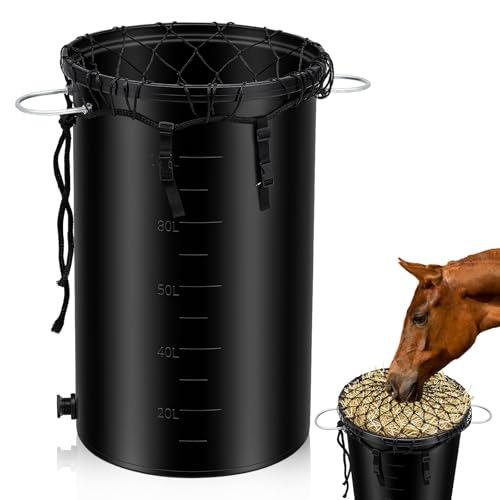
This complete hay feeder set includes a durable plastic bucket, hay net, adjustable strap, and drain plug. Its 30”×18”×18” footprint and a 17.5-inch net opening accommodate substantial hay while slowing intake. The design aims to extend feeding time and support digestive health, with sturdy construction for indoor and outdoor use.
MKO SHUN Slow Feed Hay Net (2 Pack)

These 2-pack hay nets use a 1.2-inch mesh with expansion to 1.5 inches when filled, slowing consumption by about 40%. The knotless weave is gentle on gums and teeth, and the polyester rope is weather-resistant for long-lasting use in rain, snow, or sun. Designed to minimize dental abrasion and promote calmer feeding behavior.
Derby Originals Superior Slow Feeder Hay Bag

This hay bag features a patented four-sided nylon web design that allows feeding from any part of the bag, reducing rips and tears. The Super Tough Bottom uses reinforced nylon webbing for durability while keeping hay fresh and allowing dust and debris to exit.
Derby Originals Supreme Patented Four Sided Slow Feed Hay Bag

This premium hay bag holds 2–3 flakes and uses a four-sided patented construction for versatile feeding from any side. A reinforced bottom provides durability, while the bag design aids in dust and debris exit, helping maintain hay quality during extended feeding sessions.
Tahoe Web Gate Slow Feed Hay Feeder

Attaches securely to gates or pipe fences with ten Quick Grip straps. Its 2-inch slow feed openings encourage slower, more natural eating, reducing waste and supporting digestion. It holds 5–6 flakes of hay and integrates easily into daily routines and travel.
Porta-Grazer XL Slow Hay Horse Feeder

The Porta-Grazer XL includes a barrel and a six-hole pan, enabling feeding from hay bales of varying sizes and even cubes. It uses minimal hardware to avoid snagging on blankets or halters and is suitable for horses wearing shoes. It can be used with a range of hay types and setups for slow feeding.
Buying Guide: Key Purchase Considerations
Weight and portability: Outdoor and travel use benefit from lightweight, durable materials and compact designs. Consider how easy it is to move, clean, and store the feeder.
Feeding capacity and opening size: Larger nets and bags with appropriate hole sizes slow intake without frustrating the horse. Mesh hole size should balance safety, chewing comfort, and forage value.
Durability and materials: Weather resistance matters for rain, sun, and cold. Knotless weaves and reinforced bottoms tend to last longer and reduce the need for replacements.
Ease of filling and maintenance: Quick-fill designs, simple straps, and slotted openings reduce effort during daily routines. Cleanability is important to avoid mold or bacteria growth.
Fit with feeding goals: Choose designs that match the horse’s eating behavior, whether you’re focusing on digestion, boredom reduction, or extended feeding during training or travel.
Cost of ownership: While premium features add durability and comfort, evaluate long-term value by considering expected lifespan and replacement parts availability.
Safety and comfort: Look for gentle contact surfaces, knot-free regions to protect mouths, and secure mounting to prevent choking hazards or snagging on gear.
Versatility: Some models work with various hay types and bale sizes, while others are optimized for specific routines. Assess whether you need a single solution or multiple configurations for different horses or environments.