The best UV light for pet urine depends on whether you want broad coverage, a rechargeable design, or a 365nm flashlight. The Vansky and ESCO LITE 51-LED models are suited to routine home searches, while ESCO LITE’s 128-LED model is designed for covering a larger area. For rechargeable options with battery displays, consider the 365nm flashlight or TrixHub model. UV lights can help locate some dried stains, but they do not replace cleaning.
| Product | Best For | Listed Feature |
|---|---|---|
| Vansky 51 LED | Wide home inspections | 395nm light; 51 LEDs |
| 365nm Rechargeable Flashlight | Rechargeable convenience | LCD battery display |
| ESCO LITE 51 LED | Carpets and everyday cleaning | 395nm light; broad beam |
| ESCO LITE 128 LED | Larger inspection areas | 128 LEDs; wider coverage |
| TrixHub 365nm | USB-C charging | Digital battery display |
Vansky 51-LED UV Stain Detector

This 395nm flashlight has 51 high-intensity LEDs and a wide floodlight beam. Its listed features include 945 µW/cm² beam intensity and broad surface coverage, making it a practical choice for scanning floors and rugs. The manufacturer says dried pet urine and other organic residues may fluoresce under the light.
Best for: Pet owners who want to inspect larger areas with a 395nm handheld light. It is selected for its 51-LED array and stated wide-beam coverage. The light is most useful in a dark room after the urine has dried; fresh wet urine may not fluoresce until dry.
Rechargeable 365nm UV Flashlight With LCD
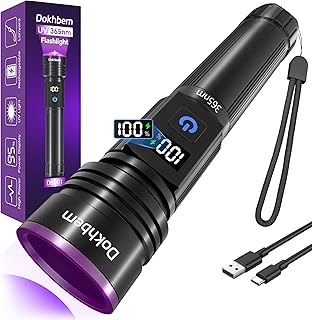
This flashlight uses 365nm UV light and includes an LCD screen that displays the remaining battery percentage. Its listed charging time is 3 to 3.5 hours, with up to four hours of use. The feature list also mentions USB charging, a carrying lanyard, and a waterproof design.
Best for: Buyers who prioritize rechargeable use and a visible battery indicator. Choose this if you want to monitor charge while checking rooms or taking the light along. Its listed runtime is up to four hours, so it may need recharging for longer inspection sessions.
ESCO LITE 51-LED 395nm Black Light

The ESCO LITE 51-LED flashlight emits 395nm UV light and is described as covering a larger area to help locate pet urine and food stains on rugs and carpets. Its feature list also describes uses such as spotting fluorescent materials and scorpions.
Best for: A household search focused on carpet and rug stains, especially when broad coverage matters. It is selected for its 51 LEDs and stated ability to show dried urine and food stains. The listed limitation is important: it is effective for detecting dry urine, not necessarily fresh accidents.
ESCO LITE 128-LED UV Flashlight

This ESCO LITE model has 128 LEDs and is presented as a higher-coverage option for finding dog urine on floors and carpets. The product features describe a larger illuminated area and use for outdoor activities, including spotting scorpions.
Best for: Buyers who want to scan more ground during a home inspection. The 128-LED array is the reason it stands out among the listed models. Avoid choosing by LED count alone if portability or a rechargeable battery display is your priority; those features are not specified in the supplied product details.
TrixHub 365nm Rechargeable Black Light

The TrixHub flashlight is listed as a 365nm UV model with USB-C charging and a digital battery-level display. Its feature list describes an aluminum-alloy body and a sealed, waterproof design. It is intended for fluorescent substances and dried pet urine stains on surfaces such as rugs and carpets.
Best for: Buyers looking for a rechargeable 365nm light with USB-C and a battery display. Choose this if those charging and monitoring features matter more than a stated high LED count. The product listing warns users not to shine the light into their eyes.
Buying Guide: Choosing a UV Light For Pet Urine
Should you choose 365nm or 395nm?
The listed products include both 365nm and 395nm lights. Compare the stated wavelength and other features, such as beam coverage and charging, rather than assuming wavelength alone guarantees a result. Fluorescence can vary by stain and surface, so a UV flashlight may not reveal every accident.
How much coverage do you need?
For checking a large room or several carpeted areas, consider products that specifically describe a wide beam or larger coverage, such as the Vansky and ESCO LITE models. The 128-LED ESCO LITE is described as covering a larger area. A smaller inspection area may not require that emphasis.
Do rechargeable features matter?
The two rechargeable models listed here include battery displays; one specifies USB charging, and TrixHub specifies USB-C. Consider whether you prefer a charge indicator and the listed charging connection. Battery life and charging details are not provided for every product, so compare only the information available for your chosen model.
How should you search for stains?
Darken the room and inspect surfaces after suspected urine has dried. Move the light across floors, rugs, and carpets, and note areas that visibly fluoresce. Household materials can also fluoresce, so treat the light as a locating aid rather than definitive proof that a mark is urine. Follow appropriate cleaning directions for the surface.
Frequently Asked Questions
Can a UV light detect fresh pet urine?
Not reliably based on the product information provided. The Vansky and ESCO LITE 51-LED listings specify that urine should be dry for detection.
Will every urine stain glow under a black light?
No guarantee is provided that every stain will fluoresce. Results can vary, and other materials may also glow.
Should I use a UV flashlight in a bright room?
A dark room is recommended in the Vansky product information because it can make fluorescent marks easier to see.
Does a UV light clean pet urine?
No. A UV flashlight can help locate possible stains, but you still need to clean the affected area with a product suitable for the surface.
Which option is best for checking a broad area?
Compare the Vansky 51-LED and ESCO LITE 128-LED models, both of which list broad or larger-area coverage. The 128-LED model emphasizes its larger coverage, while Vansky specifies a wide floodlight beam.