owners looking for reliable, wire-free ways to keep dogs safe outdoors can choose from GPS-based and traditional radio-frequency wireless fence systems. This guide highlights five top options, comparing setup, range, training features, and weather resistance to help you pick a system suited to yards, farms, or parks. Each product section links to its Amazon listing for quick reference, and a practical buying guide follows with considerations for size, terrain, and training needs.
style=”display:none;”>Summary Table of Chosen Products: This table lists five recommended wireless dog fence systems, including their name, brand, and best-use notes. GPS precision, boundary shapes, and training features vary, so choose based on terrain, dog size, and whether you prefer two-dog capability or GPS-based accuracy.
DJNFGQ GPS Wireless Dog Fence System

The DJNFGQ GPS Wireless Dog Fence System uses satellite-based positioning to define a virtual boundary without buried cables. The collar communicates with GPS satellites to trigger corrective actions when the dog approaches the boundary, offering precise containment for yards, parks, or farms. This system supports two boundary modes: a circular fence for quick radius setup and a free-form polygon to outline complex terrain. Benefits include no trenching and rapid boundary adjustments, ideal for flexible outdoor layouts.
Key features include GPS-based accuracy, two fence modes (circular and polygonal), and a waterproof rechargeable collar. A notable advantage is the ability to adapt boundaries to irregular real-world environments, reducing dead zones and improving containment reliability.
PetSafe Wireless Pet Containment System (Original)

The PetSafe Wireless Pet Containment System provides a circular boundary up to 1/2 acre and is designed for quick, no-dog-hair installation without wiring. It includes multiple correction levels and a tone-only training mode to reinforce positive behavior. The waterproof, rechargeable receiver collar fits dogs over 6 months and weighs at least 8 pounds, with adjustable neck sizes from 6 to 28 inches. This system emphasizes portability and ease of use for travel or temporary containment needs.
TLKTL Wireless Dog Fence System for 2 Dogs
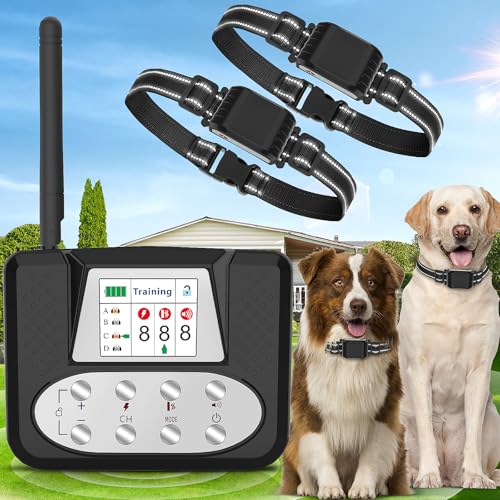
TLKTL offers a two-dog wireless fence system with a central transmitter and a large LCD screen. The boundary range is adjustable from 50 to 990 feet, and the system supports two receiver collars, enabling separate or combined containment for households with multiple pets. The setup emphasizes an open-area installation and a clear signal path to maintain a stable circular zone. Training modes include audible warnings and a progressive correction sequence to guide dogs back inside the boundary.
Sglyq GPS Wireless Dog Fence System
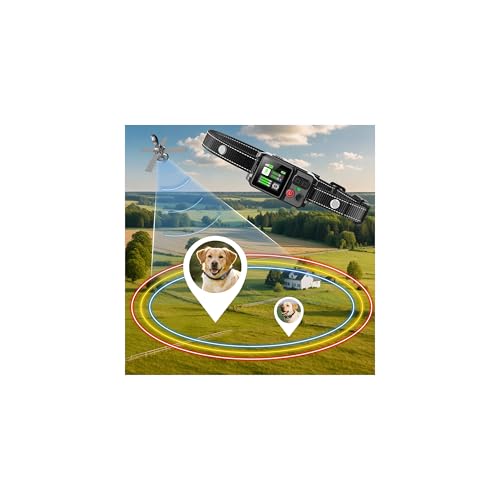
The Sglyq GPS Wireless Dog Fence System uses adjustable GPS boundaries with a substantial range, up to 6500 feet. Its IPX7 waterproof collar design ensures resilience in rain or splashes, making it suitable for varied outdoor conditions. Training modes include Beep, Vibration, and a configurable static correction. The system aims to provide a robust, edge-to-edge virtual boundary without wires, which is especially useful for larger properties and multi-terrain settings.
Htcuto Wireless Dog Fence System for 2 Dogs

The Htcuto system combines wireless fencing with remote training collar features, offering two modes of boundary and a 4-mode training toolkit (Ultrasound, Beep, Vibration, and Safety Shock). It supports a wide training range up to 6000 feet and provides adjustable radius from 25 to 3500 feet. This setup is suitable for households seeking both containment and guided training using a single device, particularly in larger outdoor spaces or rural properties.
Buying Guide for Wireless Dog Fence Systems
- Boundary technology: GPS-based systems offer flexible, weather-resilient boundaries that adapt to terrain, while traditional RF systems rely on a fixed circle or polygon with a base station. GPS can be ideal for uneven land, while RF works well for smaller yards with fewer obstructions.
- Boundary shape and size: Consider whether you need a simple circular area or a custom polygon around landscaping, water features, or irregular property lines. Larger properties benefit from GPS or higher-range RF systems.
- Training and correction modes: Look for multi-mode options (beep, vibration, static) and whether you prefer beeps as warnings or progressive corrections. Some systems include remote training modes for teaching with a handheld controller.
- Number of dogs and collars: If you have two dogs, choose a system designed for multi-dog use with two compatible collars. Ensure collars fit your dog’s size and are waterproof for outdoor use.
- Weather resistance and battery life: Waterproof collars (IPX7 or better) and long battery life reduce maintenance. Consider charging cycles and whether the collar supports quick-recharge capabilities.
- Ease of setup: Wireless systems that require minimal installation are ideal for renters or temporary setups.GPS-based systems may require smartphone apps for boundary management, while RF systems usually include a base transmitter and collar receivers.
- Terrain and obstacles: Trees, walls, and metal structures can affect signal range. Some systems offer adjustable boundary radii and guidance on walking the boundary to optimize signal reliability.
- Safety and dog temperament: Start with the lowest correction level and monitor your dog’s response. Choose systems with a tone-only mode to avoid unnecessary corrections during acclimation.
- Maintenance and support: Review warranty terms, customer support responsiveness, and availability of replacement collars or components in case of wear or damage.
- No wires or digging: If you want a “no trenching” solution, select GPS or RF systems that advertise wireless installation and easy boundary updates.
Comparative Outlook
GPS-based systems offer maximum flexibility for large or irregular properties and reduce the need for physical boundary markers. They tend to require more initial setup to calibrate satellite signals but pay off with convenient boundary adjustments and less physical installation. RF-based systems excel in straightforward yards, often delivering quicker setups and simpler management, with consistent performance in unobstructed outdoor spaces. For households with multiple dogs, ensure the system supports two collars and synchronized boundary management. Weather resistance and collar comfort are ongoing considerations for year-round use.