The following article highlights five top-rated rat traps commonly used in homes, farms, and businesses. Each option emphasizes safety, ease of use, and effective control. Read on to compare features, setup, and how they perform in real-world settings.
| Product | Brand | Type | Key Benefit |
|---|---|---|---|
| Tomcat Rat Snap Trap | Tomcat | Traditional snap | Reusable with high escape resistance |
| UCatch Dual-Entry Rat Trap | UCatch | Dual-entry, hands-free | Very high trap rate, safe for indoors/outdoors |
| Kat Sense Covered Rat Trap | Kat Sense | Covered tunnel | Touch-free disposal, pet/kid safe |
| TRATPER Dual-Tunneled Trap | TRATPER | Covered, dual-entry | Automatic locking, quick kill |
| Victor M205-9 Wooden Snap Traps | Victor | Wooden snap | Simple, high catch rate |
Tomcat Rat Snap Trap
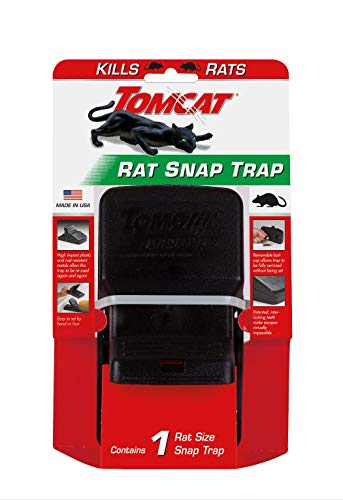
The Tomcat Rat Snap Trap is a reusable, classic snap-style trap designed to kill rats quickly and reliably. It features interlocking teeth that block potential escapes and a high-impact plastic frame combined with rust-resistant metals for long-term usage. The trap is straightforward to set by hand or with a foot for easier handling in tight spaces. Its durable construction makes it suitable for both home and farm environments, where repeated use is common. The simplicity of operation means minimal maintenance and fast results when placed in known rodent hotspots.
UCatch Dual-Entry Rat Trap

The UCatch rat trap emphasizes safety and efficiency with a dual-entry design that supports a 99.9% trap rate. It is positioned as a hands-free trapping solution, allowing users to set, trap, and dispose without direct contact. The trap is built for both indoor and outdoor use, helping protect kitchens, basements, gardens, and perimeter areas. It’s easy to set—bait is placed in a designated area, the lever is depressed, and the trap is positioned in hotspots. The design aims to minimize exposure to rodents while maintaining straightforward maintenance and cleaning between uses.
Kat Sense Covered Rat Trap

Kat Sense offers a covered tunnel trap engineered to prevent accidental triggering and to deliver a quick humane kill. The tunnel design keeps handling clean and reduces the chance of disease exposure. Its reusable mechanism supports repeated use, making it practical for ongoing rodent control in homes, workshops, and farms. The integration of interior trapping components helps ensure rodents remain contained inside until disposal, improving safety for children and pets in everyday environments.
TRATPER Dual-Tunneled Rat Trap

TRATPER’s dual-tunneled design provides a safe, enclosed trapping experience that reduces direct contact with captured rodents. The trap is easy to set using a hands-free approach, and the enclosed tunnel keeps pets and kids protected during operation. It’s designed to deliver a quick and humane kill, with a simple automatic locking mechanism that eliminates the need for exposed wires or hooks. This model supports repeated use in various settings, including indoor nooks and outdoor hotspots frequented by rats.
Victor M205-9 Wooden Snap Traps

The Victor M205-9 line features wide plastic bodies, a traditional wooden snap mechanism, and a high-visibility pedal trigger. These traps are designed for straightforward use with fast action and a focus on reliability. The larger trip pedal is intended to attract rodents readily and trigger the bar quickly, supporting higher catch rates in busy households or barns. The wooden construction also offers durability in environments with dust, moisture, or debris that can affect cheaper plastic traps.
Buying Guide
Key purchase considerations help buyers choose the right rat trap for their space and safety needs. These factors cover performance, installation, safety, maintenance, and environmental fit.
- Trap type and mechanism: Snap traps provide fast kills and are generally affordable; enclosed traps reduce exposure to pets and children but may require more precise placement.
- Safety features: Look for hands-free operation, leak-proof enclosures, or touch-free disposal systems to minimize contact with captured rodents.
- Reusability and durability: Reusable traps with rust-resistant materials or sturdy plastics are cost-efficient in the long run and suitable for frequent use on farms or large properties.
- Ease of setup and maintenance: Simple baiting steps, straightforward resetting, and easy cleaning improve ongoing effectiveness and user experience.
- Indoor vs. outdoor suitability: Consider weather resistance, weather exposure, and pet or child safety when choosing locations for trap placement.
- Effectiveness indicators: Traps advertised with high capture or kill rates, dual-entry designs, or tunnel mechanisms typically offer better performance in high-traffic areas.
- Size and capacity: Larger traps can handle bigger rodents or multi-rodent hotspots, whereas compact traps fit tighter spaces like basements and sheds.
- Ethical and humane considerations: Some models emphasize humane kill mechanisms and quick responses, balancing pest control with animal welfare.
Comparison at a Glance
For quick decision-making, compare these top picks on safety, ease of use, and situational fit: the Tomcat and Victor options offer traditional, reliable snapping with straightforward maintenance; UCatch, Kat Sense, and TRATPER emphasize safety and hands-free designs for households with pets or kids; and Kat Sense’s covered tunnel design stands out for touch-free disposal and reduced handling.
When choosing, align the trap’s features with your space, the level of rodent activity, and how often you need to deploy and reset traps. A multi-trap approach, combining a quick-kill trap with a discreet, safe option, often yields the best overall results in both homes and work environments.